James Broun-Ramsay Quotes
… there will be no peace for India, nor any stability of Government in the Punjab, nor any release from anxiety and costly defensive preparations on our frontier, unless the British Government, justly indignant at the unprovoked and treacherous aggression once again committed against them by the Sikhs, shall now effectually provide against future dangers by subverting for ever the Dynasty of the Sings, by converting the Punjab into a British province, and by adopting the only measure which will secure the observance of peace by the Sikhs, namely, depriving them utterly of all the means of making war.
The Punjab, like Afghanistan and some other areas had no real tradition of government. The Sikhs of the Punjab had initiated a war with the British Colonial Empire—The 1st Anglo-Sikh War—which ended with a decisive British victory and a peace treaty where the rulers of the Punjab agreed to keep the peace. However, they really could not control the population and some Sikhs again attacked British and Muslim interests. The Governor-General reported that treaties and commitments with the Punjab leaders really meant little. The British also won the 2nd Anglo-Sikh War-. The Governor-General was determined that there would not be a 3rd war with the Sikhs of the Punjab.
James Andrew Broun-Ramsay, 1812–1860, 1st Marquess Dalhousie, British Governor-General of India, Report, September 30 1848
Sourced by: Eigen's Political and Historical Quotations

The Punjab, like Afghanistan and some other areas had no real tradition of government. The Sikhs of the Punjab had initiated a war with the British Colonial Empire—The 1st Anglo-Sikh War—which ended with a decisive British victory and a peace treaty where the rulers of the Punjab agreed to keep the peace. However, they really could not control the population and some Sikhs again attacked British and Muslim interests. The Governor-General reported that treaties and commitments with the Punjab leaders really meant little. The British also won the 2nd Anglo-Sikh War.


He had little difficulty until he and the British Government announced the plan to grant independence to India. At that point the Muslim League came up with the notion of Partition of India which polarized the Indian politicians mostly along religious lines, and much of India was "up for grabs". No one wanted to concede anything to the other side as this might strengthen the other side's image of its power and just encourage them to go for more. Wavell's job became impossible.
The attitude of the non-Muslims at that time was based on the Muslim attacks in the Punjab on Sikhs where entire Sikh villages and neighborhoods in towns and cities were murdered—every man woman and child. In many cases women were first raped. The Muslims had been whipped up by the leaders of the Muslim League to put terrorist pressure on the Sikh, Hindu and British to meet the League's political and territorial demands for an Independent Pakistan. Soon there was retaliation in kind and there were many Hindus, Sikhs and Muslims engaged in internecine slaughter and behaving "little better than animals".

This famous quotation, from this important address, at such a critical time in history has been admired for years. Despite his great oratory, the next months were to see almost 2 million Indians of all faiths killed in what was probably the worst internecine violence in human history. Ironically, the politically motivated terrorism had stopped since all the decisions had been made. The motivation for the frightful atrocities that took place from then on was vengeance and fear of more vengeance." 1st Earl Mountbatten of Burma
Even into the 21st century, the problem was not solved and Muslims from Pakistan continue their futile but tragic terrorist tactics to try and acquire more territory from India." 1st Earl Mountbatten of Burma

He was echoing proposals that he made in the Delhi Emergency Committee that had been called to cope with the butchery and murder when the Hindus and Sikhs were trying to leave the areas that were to be part of Pakistan under the Partition and the retaliations against the Delhi Muslims who were trying to flee to the new Pakistan. Unfortunately, the Muslim leadership did not want such a truce as while the land had been partitioned, Indian Money, military equipment, and other resources were yet to be divided and the Muslim leaders who had been so successful playing the violence card to gain and independent Pakistan, did not want to give up that option in the remainder of the division of India. Also, it was not at all clear that the Muslim political leaders could even then control the mobs who they had already whipped up to violence.

The White Africaners were attacking the Blacks to force them off their land so the Afrkaners could take over. The country was under British rule and the unarmed Blacks were being slaughtered by the Afrikaners who were British Subjects. Eventually the Boer War set the English against the Afrikaners. See {583902} for a related quotation.

Chamberlain’s policy was to appease Hitler and Germany to avoid war. Although he did not see Czechoslavkia as a critical British national interest and claimed he had secured peace {585941} , the reality was that he gave Germany room to start its aggression which would engulf all of Europe and much of the world. The British became the only bulwark against Hitler until the Russians stopped the Germans and America entered the war.

This quotation is an excellent example of the early, militant Gandhi. It is typical of militant theocracies of the Islamic world today.


See {613496} for the origin of the “thrashing a cannibal” phrase.

1st Earl Baldwin of Bewdley. Chamberlain was about to leave for the Munich Conference where his appeasement emboldened Hitler and the Germans and dashed all hope of peace. Baldwin was out of office, but his support of the Munich appeasement changed his image from that of a popular statesman, to a craven appeaser. See {626930} for Churchill’s view of Baldwin.
The Sepoys were Indian natives serving as enlisted men in the British Army in India. Napier had been the Commander of the British Forces in India and resigned over a dispute with the government. This quotation came from his negative report. Not long after he wrote this, the “Sepoy Rebellion” in 1857 almost destroyed English rule in India.
Some of the Patriots of Early America realized that the oppressions of British rule were coming from Parliament and initially took the position that only the King could make laws for the colonies and not Parliament. Therefore, they were as Englishmen challenging illegal English laws. Most American hostility was directed at Parliament and not the King. However, once there was any physical resistance, King George came down with such a heavy hand that American hatred transferred to him. For related quotes on the King/Parliament issue, see {639145}, {639144}, {639142}, {639141}, {639140}, & {639137}

The message was conveyed by the Secretary of State, Sir George Calvert (Lord Baltimore). Parliament and the British King were jockeying for position in their relative powers. King James took the position that Parliament could NOT make laws that affected the American Colonies. Parliament disagreed. Later, some of the American patriots would use this quotation to claim that they were only subject to the King and not to Parliament. For related quotes on the King/Parliament issue, see {639144}, {639143}, {639142}, {639141}, {639140}, & {639137}
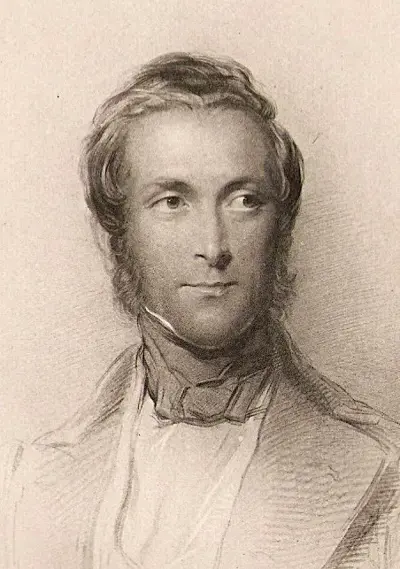
James Andrew Broun-Ramsay, styled Lord Ramsay until 1838 and known as The Earl of Dalhousie between 1838 and 1849, was a Scottish statesman, and a colonial administrator in British India. He served as Governor-General of India from 1848 to 1856.
