Richard Cobden Quotes
I cannot separate the finances of India from those of England. If the finances of the Indian Government receive any severe and irreparable check, will not the resources of England be called upon to meet the emergency, and to supply the deficiency?
Richard Cobden, 1804-1865, British Member of Parliament, Co-founder, Anti-Corn League, Speeches on questions of public policy (1870 Edition)
Sourced by: Eigen's Political and Historical Quotations

The Partition was accompanied by over 2 million murdered Indians as India was divided into a smaller India with almost all the Hindus and Sikhs and a slight majority of the Muslims and Pakistan with all Muslims who made that choice. Pakistan has been trying to de stabilize the area ever since to gain control of more land and became a theocracy and military dictatorship—sometimes de facto and sometimes de juro.

The “We” to which he was referring were the British officials and civil servants who governed all of India as a colony of the British Empire.

The Punjab, like Afghanistan and some other areas had no real tradition of government. The Sikhs of the Punjab had initiated a war with the British Colonial Empire—The 1st Anglo-Sikh War—which ended with a decisive British victory and a peace treaty where the rulers of the Punjab agreed to keep the peace. However, they really could not control the population and some Sikhs again attacked British and Muslim interests. The Governor-General reported that treaties and commitments with the Punjab leaders really meant little. The British also won the 2nd Anglo-Sikh War-. The Governor-General was determined that there would not be a 3rd war with the Sikhs of the Punjab.
The Punjab, like Afghanistan and some other areas had no real tradition of government. The Sikhs of the Punjab had initiated a war with the British Colonial Empire—The 1st Anglo-Sikh War—which ended with a decisive British victory and a peace treaty where the rulers of the Punjab agreed to keep the peace. However, they really could not control the population and some Sikhs again attacked British and Muslim interests. The Governor-General reported that treaties and commitments with the Punjab leaders really meant little. The British also won the 2nd Anglo-Sikh War.
The Sepoys were Indian natives serving as enlisted men in the British Army in India. Napier had been the Commander of the British Forces in India and resigned over a dispute with the government. This quotation came from his negative report. Not long after he wrote this, the “Sepoy Rebellion” in 1857 almost destroyed English rule in India.

That is exactly what happened. However it would not happen until after the Second World War.

The Parliament was debating the reaction to the Stamp Act by the American Colonies. One of the members, reflecting a majority view, asked sarcastically when the American Colonies had been emancipated so that they could make their own independent decisions. Pitt then hit this one out of the park by reversing the question.
In 1909 Minto was dispatched to India by the British Liberal government to reform the racism in government appointments. Minto first identified Dr. A. Mukerji, the Vice-Chancellor of Calcutta University as a perfect candidate for the first Indian appointment to the Viceroy’s Executive Council. Instead Satyendra Sinha was appointed.

The speech was never actually delivered, but instead the Bishop published it. It received wide distribution including in America where it was published by the Maryland Gazette on September 29, 1774.

This resolution was the trigger that began the debate which became the Declaration of Independence.

This quotation is an excellent example of the early, militant Gandhi. It is typical of militant theocracies of the Islamic world today.

He was arguing for investments in third world countries.

Given the time, Mill’s view on the colonies were appreciated by few Englishmen, but turned out to be exactly predict the British reality a century later.

In 1942 it was clear that India would be given its independence soon. There were a number of sticky problems in doing so. One was the fact that when the British came to India, all the states were ruled by Maharajas (Princes, Kings, etc.). The British signed treaties with almost all of them guaranteeing to protect and preserve their local powers in exchange for acceding to British Rule of the national government. But when it came time for independence, democracy was the mode—even in England. The Maharajas insisted that the British leave them with their control of their states as they had agreed, as opposed to creating democratic government at the state level. In the final analysis, the Maharajas lost all their governmental functions and privileges but were able to retain much of their wealth.


This Government Instruction to British North African Consular Personnel summarized the policies of the British government with regard to British citizens who run afoul of the law while in Morocco and other North African countries. Essentially, the British almost always insisted on a treaty with the foreign governments that gave jurisdiction to the British Counsul to try any Englishman who was accused of a crime. The national government could not put a British Subject on trial of punish him regardless of the crime. Where local people were the victim of the alleged crime, the national government could send an observer to the trial that the British consul held. To many, this was arrogant and insulting to the host governments. As high handed as it seems, there were and still are great problems with differing concepts of justice, different rights protected and different levels of corruption. In many countries “important” local officials can control or influence the decisions of courts, witnesses can be easily bribed lie, and even judges can readily be bought. Even today, the issue of criminal jurisdiction is one of the most important subjects of negotiations between nations. The United States has similar agreements with Afghanistan, Iraq, Korea, Germany, Japan and other nations where we have armed forces. Generally, the better and more sophisticated and honest the host government justice system is, the more willing modern nations are to allow them jurisdiction over criminal matters. But generally, in the world today, these treaties are the exception. Most criminal jurisdiction is with the national government where the alleged crime takes place.
“Musalmans” was then another English term for Muslims. At the time, the Hindus and Muslims of India were both under the rule of the British. As bad as Colonial Rule was, it had some advantages for the subjects and their desire to reform government and education. Ironically, there is no Islamic nation today, with the exception of Turkey, where Muslims have the rights, freedom and privileges as they had at the turn of the century in Colonial India.


“Mahomedans” was a term at the time that was used to describe Muslims. This is one of the first serious analyses of why there was very differential achievement levels between Hindus and Muslims in Colonial India which have led to schisms that exist even now.

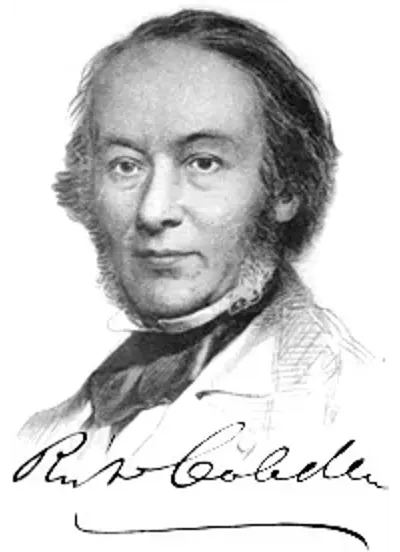
Richard Cobden was an English manufacturer, Radical and Liberal MP, associated with two major free trade campaigns, the Anti-Corn Law League and the Cobden–Chevalier Treaty.
