Charles Gravier Quotes
England must either lose her colonies or destroy them in the effort to hold them, and in either event there would be the same loss of trade, the same decay in manufactures, and the same destruction of national credit.
Charles Gravier, 1717-1787, Comte de Vergennes, French Foreign Minister, Assessment of the English political situation with respect to the American colonies, July 29, 1775
Sourced by: Eigen's Political and Historical Quotations


This is the same man who introduced the Stamp Act 12 years before which started the whole problem in America. See {74956}.

At the beginning of the dispute between America and England, the issue was the raising of internal American taxes by Parliament without any American representation in Parliament. The issue escalated and when the British began using force, independence then became the American objective.

The profits that England made on the North American Colonies and the Caribbean were very large. 10 years before the American Revolution most sophisticated English politicians realized that and one of the reasons the British fought so hard to keep America from Independence was that money.

See {641497} for a quote from the Grenville speech. Fox, a conservative on most issues was an absolute radical on the issue of America. To aggravate the hawks in parliament, he used to dress in the colors of George Washington’s uniform to show his support once the war broke out.


Hobson, like Mark Twain in America, was a major critic of imperialism.

Hobson, like Mark Twain in America, was a major critic of imperialism.

The Parliament was debating the reaction to the Stamp Act by the American Colonies. One of the members, reflecting a majority view, asked sarcastically when the American Colonies had been emancipated so that they could make their own independent decisions. Pitt then hit this one out of the park by reversing the question.

This resolution was the trigger that began the debate which became the Declaration of Independence.


Given the time, Mill’s view on the colonies were appreciated by few Englishmen, but turned out to be exactly predict the British reality a century later.


Hong Kong was not always a successful city or colony. In 1844 the British were thinking of swapping it for a better colony. However, in a rare combination of synergistic development of a colony, the great strengths of the Chinese and that of the English combined to make Hong Kong one of the best and well developed cities in the world. Few imperial colonies turned out as well.

The industrial revolution was also creating an entirely new form and structure for international economics.

Frederick the Great. He and many other Europeans thought that England had been so preoccupied with the American rebellion that she was ignoring Europe and other traditional foreign policy interests of theirs.

Some of the Patriots of Early America realized that the oppressions of British rule were coming from Parliament and initially took the position that only the King could make laws for the colonies and not Parliament. Therefore, they were as Englishmen challenging illegal English laws. Most American hostility was directed at Parliament and not the King. However, once there was any physical resistance, King George came down with such a heavy hand that American hatred transferred to him. For related quotes on the King/Parliament issue, see {639145}, {639144}, {639142}, {639141}, {639140}, & {639137}

The message was conveyed by the Secretary of State, Sir George Calvert (Lord Baltimore). Parliament and the British King were jockeying for position in their relative powers. King James took the position that Parliament could NOT make laws that affected the American Colonies. Parliament disagreed. Later, some of the American patriots would use this quotation to claim that they were only subject to the King and not to Parliament. For related quotes on the King/Parliament issue, see {639144}, {639143}, {639142}, {639141}, {639140}, & {639137}


Ministers refers to the Government Ministers, not to clergy.
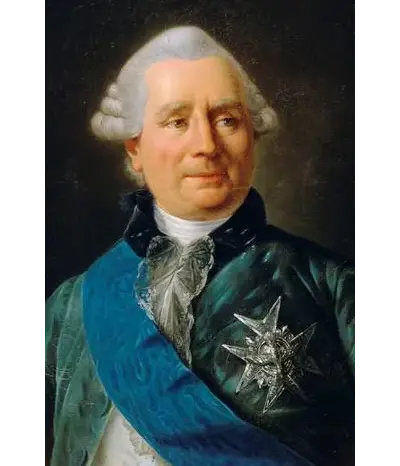
Charles Gravier, Count of Vergennes was a French statesman and diplomat. He served as Foreign Minister from 1774 during the reign of Louis XVI, notably during the American War of Independence.
