Charles Gravier Quotes
Always keep in mind that in separating the United States from Great Britain, it is above all their commerce we want.
Charles Gravier, 1717-1787, Comte de Vergennes, French Foreign Minister, Statement to the French Finance Minister
Sourced by: Eigen's Political and Historical Quotations

This resolution was the trigger that began the debate which became the Declaration of Independence.

This resolution of independence was voted upon a month before the Declaration of Independence. It was approved by 12 of the colonies but not by New York. The Congress appointed a committee to draft what became the Declaration of Independence and that was approved by all the colonies. The resolution was introduced by Richard Henry Lee on instructions from Virginia. The graphic is of Lee’s original notes.

Americans were by no means united in wanting to take up arms against Britain. Relatively few of the loyalist quotations have come down to us, but here is one. It also illustrates why some Americans wanted complete independence: So that they could escape their debts to English merchants. Most however had more noble and unselfish motives. As a matter of fact, the American Revolution is unusual in the sense that there were so many men of substance who sacrificed much of their material wealth for the American ideal. There were also the rogues and opportunists as Galloway describes.


See {641497} for a quote from the Grenville speech. Fox, a conservative on most issues was an absolute radical on the issue of America. To aggravate the hawks in parliament, he used to dress in the colors of George Washington’s uniform to show his support once the war broke out.

At the beginning of the dispute between America and England, the issue was the raising of internal American taxes by Parliament without any American representation in Parliament. The issue escalated and when the British began using force, independence then became the American objective.


The purpose was to try and get the king and parliament not to enforce the Stamp Act in the colonies. The delegates had to thrash out the language and it was important to flatter the king and parliament. While some delegates felt that loyalty to the mother country, many others thought that the king and parliament had betrayed them and thought this language gross hypocrisy. See {589426} for one delegate’s description of the difficulty.


Nostradamus made thousands of prophecies most of which seem not to have occurred as he predicted. However there were a few that some people believe predicted later events. In this case some think that he predicted the colonization and independence of America.


This is the same man who introduced the Stamp Act 12 years before which started the whole problem in America. See {74956}.

The professor did not agree with these reasons and took the position that England was foolish in their use of military force. However, in America we rarely hear the English side of the dispute that led to war between England and her American colonies.


The Parliament was debating the reaction to the Stamp Act by the American Colonies. One of the members, reflecting a majority view, asked sarcastically when the American Colonies had been emancipated so that they could make their own independent decisions. Pitt then hit this one out of the park by reversing the question.


Because the early nation's government was still in a state of becoming, foreign powers were hesitant to do business and conclude treaties with the newly-formed United States of America:
Salisbury had always been opposed to colonial adventurism and was opposed to the jingo segment of English society associated with his Colonial Secretary Joseph Chamberlain. Nonetheless, Britain became more embroiled in Africa. Salisbury’s explanation was in French: “L’appetit vient en mangeant.”


Given the time, Mill’s view on the colonies were appreciated by few Englishmen, but turned out to be exactly predict the British reality a century later.
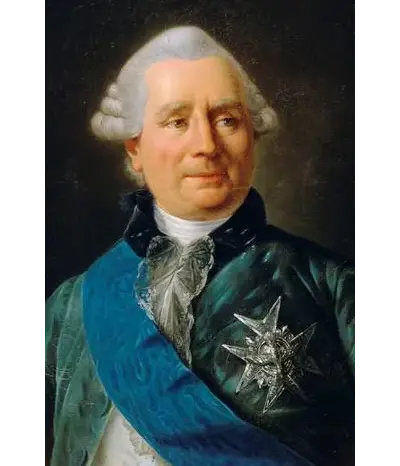
Charles Gravier, Count of Vergennes was a French statesman and diplomat. He served as Foreign Minister from 1774 during the reign of Louis XVI, notably during the American War of Independence.
