John Stuart Mill Quotes
Though Great Britain could do perfectly well without her colonies, and though on every principle of morality and justice she ought to consent to their separation, should the time come when, after full trial of the best form of union, they deliberately desire to be dissevered—there are strong reasons for maintaining the present slight bond of connection, so long as not disagreeable to the feelings of either party.
Given the time, Mill’s view on the colonies were appreciated by few Englishmen, but turned out to be exactly predict the British reality a century later.
John Stuart Mill, 1806-1873, Member of Parliament, British Political Economist, Representative Government, 1861
Sourced by: Eigen's Political and Historical Quotations

Hobson, like Mark Twain in America, was a major critic of imperialism.


Even into the 21st century, the problem was not solved and Muslims from Pakistan continue their futile but tragic terrorist tactics to try and acquire more territory from India." 1st Earl Mountbatten of Burma

The Parliament was debating the reaction to the Stamp Act by the American Colonies. One of the members, reflecting a majority view, asked sarcastically when the American Colonies had been emancipated so that they could make their own independent decisions. Pitt then hit this one out of the park by reversing the question.

This resolution was the trigger that began the debate which became the Declaration of Independence.


Hong Kong was not always a successful city or colony. In 1844 the British were thinking of swapping it for a better colony. However, in a rare combination of synergistic development of a colony, the great strengths of the Chinese and that of the English combined to make Hong Kong one of the best and well developed cities in the world. Few imperial colonies turned out as well.

5th Earl of Rosebery


He was addressing the Conservatives of Ulster, the Northern Ireland province that was the center of the Orangemen movement of Irish Protestants who were fighting to retain 'Protestant Ascendency' -- which was the social, political and cultural domination of the Protestants (the minority) over the Catholics (the majority). This was best achieved by keeping Ireland a part of Great Britain as opposed to having Ireland as a separate, independent country.


Coping with the French and their Indian allies was a problem for all the American colonies and Franklin was the strongest voice for some kind of union or federation for not only mutual defense, but to facilitate commerce by having some uniform currency and basic laws of trade to promote the mutual economy. The 6 Iroquois tribes had years ago formed the Iroquois nation complete with a formal constitution that maintained tribal identity but also enabled unified action if any were attacked and provided mutual assistance on a number of economic areas. They became the strongest, wealthiest, healthiest and most sophisticated nation of North America before European colonization and unlike many other Indians with a few exceptions–see {21747} for an example–got along very well with the English colonists. Franklin was a great admirer and wanted to use some of their Constitutional provisions in the American Constitution 36 years later, but at the time tried to embarrass many American's into forming a union with language like this quote. Actually, he did not think of them as savages at all, but most Americans who knew little about them did, and Franklin was never above using people's prejudices to get them to buy into one of his political ideas.
Hobson, like Mark Twain in America, was a major critic of imperialism.


Chamberlain’s policy was to appease Hitler and Germany to avoid war. Although he did not see Czechoslavkia as a critical British national interest and claimed he had secured peace {585941} , the reality was that he gave Germany room to start its aggression which would engulf all of Europe and much of the world. The British became the only bulwark against Hitler until the Russians stopped the Germans and America entered the war.

This was a last attempt to avoid war. Lord Howe met with William Rutledge, John Adams and Benjamin Franklin. The discussions were civil and Howe wanted to avoid a conflict but he did not have the authority to accept the American colonists demand for independence.

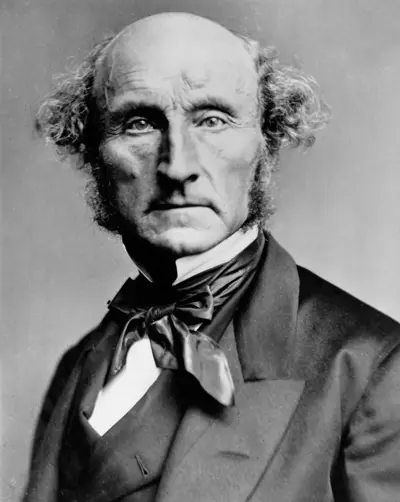
John Stuart Mill, usually cited as J. S. Mill, was an English philosopher, political economist, Member of Parliament, and civil servant. One of the most influential thinkers in the history of classical liberalism, he contributed widely to social theory, political theory, and political economy. Dubbed "the most influential English-speaking philosopher of the nineteenth century", he conceived of liberty as justifying the freedom of the individual in opposition to unlimited state and social control.
