Richard Henry Lee Quotes
That these United Colonies are, and of right ought to be, free and independent States, that they are absolved from all allegiance to the British Crown, and that all political connection between them and the State of Great Britain is, and ought to be, totally dissolved.
This resolution was the trigger that began the debate which became the Declaration of Independence.
Richard Henry Lee, 1732-1794, Member of the Continental Congress, Signer of the Declaration of Independence, U.S. Senator (VA), Resolution proposed to the Continental Congress, June 7, 1776
Sourced by: Eigen's Political and Historical Quotations

This resolution of independence was voted upon a month before the Declaration of Independence. It was approved by 12 of the colonies but not by New York. The Congress appointed a committee to draft what became the Declaration of Independence and that was approved by all the colonies. The resolution was introduced by Richard Henry Lee on instructions from Virginia. The graphic is of Lee’s original notes.


This was the first official act of any state in declaring independence from England. On July 4th---almost 3 months later---Congress issued the Declaration of Independence. But North Carolina had taken the first official step.


This was written more than a year before the American Revolution Battles began. It took time to ship the men and supplies to America and the British did not handle that task with much efficiency. See {636926} for another of the King’s statements.


Americans were by no means united in wanting to take up arms against Britain. Relatively few of the loyalist quotations have come down to us, but here is one. It also illustrates why some Americans wanted complete independence: So that they could escape their debts to English merchants. Most however had more noble and unselfish motives. As a matter of fact, the American Revolution is unusual in the sense that there were so many men of substance who sacrificed much of their material wealth for the American ideal. There were also the rogues and opportunists as Galloway describes.


The revolutionary acts from some of the more radical colonists but the colonial power structure was trying to negotiate for changes from the taxation and rights-impinging laws that Parliament had passed. Within a year the Continental Congress would take a more revolutionary position when this petition yielded no betterment-- {636864} and {636958}.

The message was conveyed by the Secretary of State, Sir George Calvert (Lord Baltimore). Parliament and the British King were jockeying for position in their relative powers. King James took the position that Parliament could NOT make laws that affected the American Colonies. Parliament disagreed. Later, some of the American patriots would use this quotation to claim that they were only subject to the King and not to Parliament. For related quotes on the King/Parliament issue, see {639144}, {639143}, {639142}, {639141}, {639140}, & {639137}


At the beginning of the dispute between America and England, the issue was the raising of internal American taxes by Parliament without any American representation in Parliament. The issue escalated and when the British began using force, independence then became the American objective.

This appears to be one of the first uses of the word "United" with respect to what was to become the United States.

The Parliament was debating the reaction to the Stamp Act by the American Colonies. One of the members, reflecting a majority view, asked sarcastically when the American Colonies had been emancipated so that they could make their own independent decisions. Pitt then hit this one out of the park by reversing the question.

Fox was one of the opposition leaders who were opposed to the heavy handed policies that the British King and Government had used.
See {641497} for a quote from the Grenville speech. Fox, a conservative on most issues was an absolute radical on the issue of America. To aggravate the hawks in parliament, he used to dress in the colors of George Washington’s uniform to show his support once the war broke out.

This is a very interesting quotation. A contemporary historian tells us how rapidly the American colonists organized when Parliament passed the Tea Tax. Even with the Internet and social media it would be hard to organize representation from 13 states that fast today. The word of mouth and mail of the day was surprising to most of us. The passion on the issue and the public interest must have been extraordinary. Ramsay was the first major historian of the American Revolution.

That is exactly what happened. However it would not happen until after the Second World War.


This is the same man who introduced the Stamp Act 12 years before which started the whole problem in America. See {74956}.

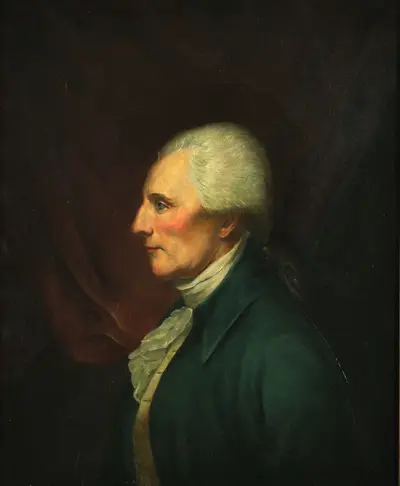
Richard Henry Lee was an American statesman and Founding Father from Virginia, best known for the June 1776 Lee Resolution, the motion in the Second Continental Congress calling for the colonies' independence from Great Britain leading to the United States Declaration of Independence, which he signed. He also served a one-year term as the President of the Continental Congress, was a signatory to the Articles of Confederation, and was a United States Senator from Virginia from 1789 to 1792, serving during part of that time as the second President pro tempore of the upper house.
