Charles James Fox Quotes
This [passing the Prohibitory Act] puts us in a complete war with America.
Fox was one of the opposition leaders who were opposed to the heavy handed policies that the British King and Government had used.
Charles James Fox, 1749-1806, British Lord of the Treasury & Foreign Minister (Whig), Speech to the House of Commons, December 10, 1775
Sourced by: Eigen's Political and Historical Quotations

While the official battles of the American Revolution did not begin until 1776, parts of the American colonies were in a de facto state of rebellion and the British could not enforce their laws. See {636925} for another of the King’s statements.

This was written more than a year before the American Revolution Battles began. It took time to ship the men and supplies to America and the British did not handle that task with much efficiency. See {636926} for another of the King’s statements.

Americans were by no means united in wanting to take up arms against Britain. Relatively few of the loyalist quotations have come down to us, but here is one. It also illustrates why some Americans wanted complete independence: So that they could escape their debts to English merchants. Most however had more noble and unselfish motives. As a matter of fact, the American Revolution is unusual in the sense that there were so many men of substance who sacrificed much of their material wealth for the American ideal. There were also the rogues and opportunists as Galloway describes.
This was written more than a year before the “blows” began. It took time to ship the men and supplies to America and the British did not handle that task with much efficiency.

The simplistic view that the American colonists were patriots and the British were the colonizers against whom the colonists revolted is not really accurate. The American colonists were polarized into patriots and loyalists. The Loyalist Americans ranged from many of those merchants whose business depended upon England, those whose family were still in England, those whose religion made them loyal to the Church of England, slaves who would be free under British law, Americans who had strong cultural and intellectual ties to England and those Americans who were great believers in monarchy and whose honor required that they fulfill the oath that they had taken to the King of England. Some of the worst atrocities of the American Revolution occurred in the battles of these Americans against each other. See {82105} for more on this point.

The British had closed Boston Harbor until the English merchants who lost their goods at the Boston Tea Party were paid for their damages. A convention was called to discuss a response to the closing of Boston Harbor and New York City convened a public meeting to come up with instructions for their delegates to the conference. One amazing thing was that they advocated a boycott of English goods. What was amazing was that there was no nation and New York and Massachusetts were separate entities and sectionalism was rife, yet New Yorkers were willing to sacrifice to help Bostonians. The New York sacrifice was all the greater because most of the imports from England landed at New York harbor where there was work created for New Yorkers and business for New York companies. New York stood to lose the most with a boycott. Philadelphia which also advocated a boycott, lost little as they were not a harbor for imports. New Yorkers also provided assistance to their competitors, the Bostonians who were out of work. See {589413}.

This resolution was the trigger that began the debate which became the Declaration of Independence.

This resolution of independence was voted upon a month before the Declaration of Independence. It was approved by 12 of the colonies but not by New York. The Congress appointed a committee to draft what became the Declaration of Independence and that was approved by all the colonies. The resolution was introduced by Richard Henry Lee on instructions from Virginia. The graphic is of Lee’s original notes.

See {636935}for the policy decision that triggered this order.

Wilkes was a strong advocate for the American cause—so much so that some in Parliament tried to deny him his seat in Parliament for his disloyal point of view.

This is a very interesting quotation. A contemporary historian tells us how rapidly the American colonists organized when Parliament passed the Tea Tax. Even with the Internet and social media it would be hard to organize representation from 13 states that fast today. The word of mouth and mail of the day was surprising to most of us. The passion on the issue and the public interest must have been extraordinary. Ramsay was the first major historian of the American Revolution.


Les Américains ont échappé à l'Angleterre.
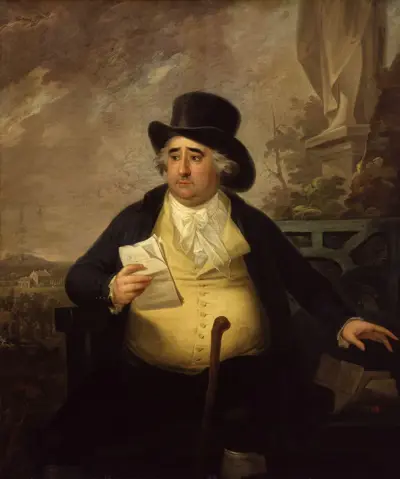
Charles James Fox, styled The Honourable from 1762, was a prominent British Whig statesman whose parliamentary career spanned 38 years of the late 18th and early 19th centuries. He was the arch-rival of the Tory politician William Pitt the Younger; his father Henry Fox, 1st Baron Holland, a leading Whig of his day, had similarly been the great rival of Pitt's famous father, William Pitt, 1st Earl of Chatham ("Pitt the Elder").
