William Pitt the Younger Quotes
When your lordships look at the papers transmitted to us from America-- when you consider their decency, firmness, and wisdom, you cannot but respect their cause … For myself I must declare and avow, that in all my reading and observation … that for solidity of reasoning, force of sagacity, and wisdom of conclusion … no nation or body of men can stand in preference to the Congress at Philadelphia. I trust that it is obvious to your lordships, that all attempts to impose servitude upon such men, to establish despotism over such a mighty continental nation, must be vain, must be fatal.
1st Earl of Chatham. The Continental Congress had endorsed and sent to England a set of resolutions from Suffolk County, Massachusetts, drawn up by Joseph Warren. Legislators forever since have admired the logic and presentation of the case for America. The King and the Prime Minister failed to heed Pitt’s view, and the Declaration of Independence and the American Revolution followed.
William Pitt, 1708-1778, British Secretary of State, Lord Privy Seal & leader of the House of Commons, Speech in the House of Lords, October 26, 1775
Sourced by: Eigen's Political and Historical Quotations


This resolution of independence was voted upon a month before the Declaration of Independence. It was approved by 12 of the colonies but not by New York. The Congress appointed a committee to draft what became the Declaration of Independence and that was approved by all the colonies. The resolution was introduced by Richard Henry Lee on instructions from Virginia. The graphic is of Lee’s original notes.


This Proclamation was issued upon arrival of the British occupying imperial army in present day Iraq. The English policy makers like the Bush administration almost a century later were expecting a more welcoming reaction. See {585250}.

The Parliament was debating the reaction to the Stamp Act by the American Colonies. One of the members, reflecting a majority view, asked sarcastically when the American Colonies had been emancipated so that they could make their own independent decisions. Pitt then hit this one out of the park by reversing the question.

Burke argued for England giving America much more freedom and self determination. This quotation is, many think, the greatest description of American love of freedom that has ever been verbalized.

This resolution was the trigger that began the debate which became the Declaration of Independence.


The document was signed in his name by his ministers.

In Philadelphia, the state delegates had just started to vote for independence. The majority of each state delegation determined the vote for the state. Delaware had three delagates, but only two were in Philadelphia. Rodney, the third delegate from Delaware, had been attending a meeting in Dover when he received word that the other two Delaware delagates Thomas McKean and George Read were split—McKean for and Read against independence. Rodney immediately left for Philadelphia late on July 1. He rode all night in a thunderstorm to traverse the 80 miles to Philadelphia. He arrived in his spurs and riding boots and cast his famous vote and thus Delaware voted for Independence. After the vote, the next 2 days were spent drafting the Declaration of Independence and Rodney signed it on July 4. After Rodney returned to Delaware, he was ousted in the next election by conservative loyalists who felt that Rodney had betrayed them and England.


Madison was defending the proposed Constitution against a vocal minority who complained that the Federal government would be dominant over the States and the large cities. Madison pointed out that it was people who fought the Revolution and sacrificed for it, not States or political entities. The Constitution was to be for the people, not the existing governmental entities. It was for Americans and not for local politicians. The “State’s Rights faction lost the debate, and the Constitution and Bill of Rights was adopted. That is why this quotation is so important. The slavery enthusiasts, racists, and others have constantly tried to diminish the Federal supremacy even to this day.

Crockett and a large group of Tenesseeans all died defending the Alamo for the Liberty and Independence from the Mexican Dictator, Santa Anna.

“Magistrates” at the time were rulers and heads of government and state. There was little or no separation of powers and the chief magistrate could make edicts and laws, enforce them and be the judge and jury as well. In the United States, the President is also called the “Chief Magistrate” even though his powers are only within the Executive Branch. For us today, “Magistrate” usually refers to a judge or other official of the Judicial Branch.


While this has been one of the great American principles of political philosophy, in reality we have on many occasions interfered when a people chose an enemy of the United States or made a choice of a government which would seize power and not allow any further free choices. However, from the time JFK made this statement to today, our foreign policy record has become much better on implementing this principle.

While the official battles of the American Revolution did not begin until 1776, parts of the American colonies were in a de facto state of rebellion and the British could not enforce their laws. See {636925} for another of the King’s statements.
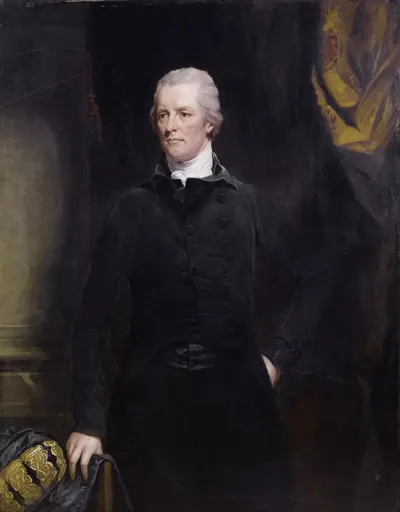
William Pitt the Younger was a prominent British Tory statesman of the late eighteenth and early nineteenth centuries. He became the youngest prime minister of Great Britain in 1783 at the age of 24 and the first prime minister of the United Kingdom of Great Britain and Ireland as of January 1801. He left office in March 1801, but served as prime minister again from 1804 until his death in 1806. He was also Chancellor of the Exchequer for all of his time as prime minister. He is known as "the Younger" to distinguish him from his father, William Pitt, 1st Earl of Chatham, who is customarily referred to as "William Pitt the Elder" (or less commonly, simply "Chatham") and had previously served as prime minister.
