Lysander Spooner Quotes
If our fathers, in 1776, had acknowledged the principle that a majority had the right to rule the minority, we should never have become a nation; for they were in a small minority, as compared with those who claimed the right to rule over them.
Lysander Spooner, 1808-1887, Libertarian, No Treason, 1867
Sourced by: Eigen's Political and Historical Quotations


Majority public opinion does not always prevail in a modern democracy as there are Constitutional limits on the prerogatives of the majority. Also leadership has played a strong role in America’s development where strong leaders have been able to do the right thing despite contrary public opinion.


For his seditious activities he was sentenced to penal servitude for life. He escaped and came to America where he entered politics


Madison was defending the proposed Constitution against a vocal minority who complained that the Federal government would be dominant over the States and the large cities. Madison pointed out that it was people who fought the Revolution and sacrificed for it, not States or political entities. The Constitution was to be for the people, not the existing governmental entities. It was for Americans and not for local politicians. The “State’s Rights faction lost the debate, and the Constitution and Bill of Rights was adopted. That is why this quotation is so important. The slavery enthusiasts, racists, and others have constantly tried to diminish the Federal supremacy even to this day.


In most revolutionary settings leaders have to persuade people who have voted with no success to turn to the rifle. In Ireland at this point, almost all the nationalsits knew that the rifle would help them but they were not sure that a vote would have the effect of a bullet.

The professor was lecturing to British university students about 75 years after the American Revolution. The “American War” is the term the British use for the American Revolution.


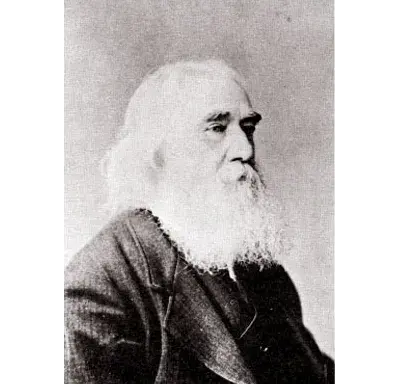
Lysander Spooner was an American individualist anarchist. He was also an abolitionist, entrepreneur, essayist, legal theorist, pamphletist, political philosopher, Unitarian, writer and a member of the First International.
