Casimir Pulaski Quotes
Know that as I could not submit to stoop before the sovereigns of Europe, so I came to hazard all the freedom of America, and desirous of passing the rest of my life in a country free and before settling as a citizen, to fight for liberty.
Casimir Pulaski, 1747-1779, Polish American Revolutionary War Cavalry Commander, Farewell Speech, Charlestown, South Carolina, August 19, 1779
Sourced by: Eigen's Political and Historical Quotations


Ultranationalist Secret Organization. Unlike the Italian Black hand for whom it was named, the Serbs were not interested in money. The were a right wing death squad that assassinated all who opposed a single, unitary, Serbian nation. Dimitrijevic was executed in 1917.

Madison was defending the proposed Constitution against a vocal minority who complained that the Federal government would be dominant over the States and the large cities. Madison pointed out that it was people who fought the Revolution and sacrificed for it, not States or political entities. The Constitution was to be for the people, not the existing governmental entities. It was for Americans and not for local politicians. The “State’s Rights faction lost the debate, and the Constitution and Bill of Rights was adopted. That is why this quotation is so important. The slavery enthusiasts, racists, and others have constantly tried to diminish the Federal supremacy even to this day.


In most revolutionary settings leaders have to persuade people who have voted with no success to turn to the rifle. In Ireland at this point, almost all the nationalsits knew that the rifle would help them but they were not sure that a vote would have the effect of a bullet.


Massachusetts rioters who had distressed Abigail Adams and others were pardoned for their crimes. Jefferson was responding to her concerns {592539} and providing her with the pardon news.


Compare Abraham Lincoln's Liberty And Union.

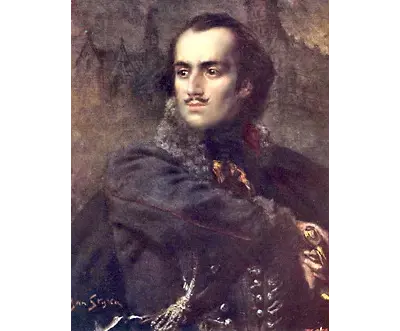
Kazimierz Michał Władysław Wiktor Pułaski of Ślepowron was a Polish nobleman, soldier and military commander who has been called, together with his counterpart Michael Kovats de Fabriczy, "the father of the American cavalry."
