John Wilkes Quotes
I call the war with our Brethren, in America an unjust and felonious war, because the primary cause and confessed origin of it is, to attempt to take their money from them without their consent …
Wilkes was a strong advocate for the American cause—so much so that some in Parliament tried to deny him his seat in Parliament for his disloyal point of view.
John Wilkes, 1747-1797, English Reformer & Member of Parliament, Lord Mayor of London Speech in Parliament, October 26, 1775
Sourced by: Eigen's Political and Historical Quotations

While the official battles of the American Revolution did not begin until 1776, parts of the American colonies were in a de facto state of rebellion and the British could not enforce their laws. See {636925} for another of the King’s statements.

2nd Earl of Guilford. This bill cut off all trade with the American Colonies. It was meant as pressure to cease the rebellion. It did not work.

The treaty ending the Revolutionary war guaranteed that the English bankers and merchants who had debts going back to before the American Revo
lution would have “no impediment” in collecting their debts in America. However, Rhode Island and Virginia in particular placed many impediments and made it virtually impossible for debts to be collected in their states. The John Jay led Supreme Court, in particular, overturned state actions on the grounds that they had implemented Patrick Henry’s sentiment and hence violated the treaty.

The crackdown on Boston which was intended to set an example and intimidate all of the other colonies backfired, and the British were told about it by their own officials in America. But they were so rigid and ideological about monarchy, that the stimulated rebellion rather than suppress them.

Fox was one of the opposition leaders who were opposed to the heavy handed policies that the British King and Government had used.


In the war year of 1813 all costal fishing and maritime trading was prohibited by the Madison administration, to eliminate contraband trade:


Americans were by no means united in wanting to take up arms against Britain. Relatively few of the loyalist quotations have come down to us, but here is one. It also illustrates why some Americans wanted complete independence: So that they could escape their debts to English merchants. Most however had more noble and unselfish motives. As a matter of fact, the American Revolution is unusual in the sense that there were so many men of substance who sacrificed much of their material wealth for the American ideal. There were also the rogues and opportunists as Galloway describes.
This quotation shows that the dissent leading to the American Revolution did not emerge suddenly in 1776 after the Battle of Bunker Hill. Dissent, sedition and even violence was documented here in 1774. Salem at the time was the second largest port in the colony and the customs tax collectors—Loyalist Americans—were run out of Salem.
This quotation is very important because it illustrates in the first of our great national political debates, the same views held by extreme, right wing anti-government, and Tea Party adherents regarding government in general and taxation in particular. See {634235} and {634234} for more of his arguments at the Ratification Convention.


This was written more than a year before the “blows” began. It took time to ship the men and supplies to America and the British did not handle that task with much efficiency.


This is the same man who introduced the Stamp Act 12 years before which started the whole problem in America. See {74956}.

Howe had written Franklin attempting to stave off a American break with England. Franklin, with the approval of the Continental Congress, replied.


Mackenzie was a British officer with whom Washington had become friends in the French & Indian War and in this letter, Washington was trying to explain the seriousness of the Boston rebellion for Britain.

Lee at that time was one of the leaders of the American colonists’ cause. He was born in England and was an old friend of Burgoyne who had just arrived in America. Lee wanted to explain the American viewpoint. Lee later became the senior major general under Washington.

The British had closed Boston Harbor until the English merchants who lost their goods at the Boston Tea Party were paid for their damages. A convention was called to discuss a response to the closing of Boston Harbor and New York City convened a public meeting to come up with instructions for their delegates to the conference. One amazing thing was that they advocated a boycott of English goods. What was amazing was that there was no nation and New York and Massachusetts were separate entities and sectionalism was rife, yet New Yorkers were willing to sacrifice to help Bostonians. The New York sacrifice was all the greater because most of the imports from England landed at New York harbor where there was work created for New Yorkers and business for New York companies. New York stood to lose the most with a boycott. Philadelphia which also advocated a boycott, lost little as they were not a harbor for imports. New Yorkers also provided assistance to their competitors, the Bostonians who were out of work. See {589413}.
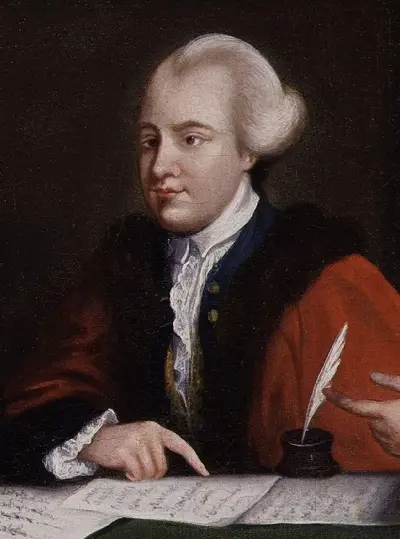
John Wilkes FRS was a British radical journalist and politician, as well as a magistrate, essayist and soldier. He was first elected a Member of Parliament in 1757. In the Middlesex election dispute, he fought for the right of his voters—rather than the House of Commons—to determine their representatives. In 1768, angry protests of his supporters were suppressed in the St George's Fields Massacre. In 1771, he was instrumental in obliging the government to concede the right of printers to publish verbatim accounts of parliamentary debates. In 1776, he introduced the first bill for parliamentary reform in the British Parliament.
