John Penn Quotes
The general temper of the People, as well here as other parts of America, is very warm. They look upon the Chastisement of Boston to be purposely vigorous, and held up by way of intimidation to all America; and in short that Boston is suffering in the Common Cause.
The crackdown on Boston which was intended to set an example and intimidate all of the other colonies backfired, and the British were told about it by their own officials in America. But they were so rigid and ideological about monarchy, that the stimulated rebellion rather than suppress them.
John Penn, 1729–1795, Colonial Governor of Pennsylvania, Grandson of Pennsylvania Founder William Penn, Report to London, 1774
Sourced by: Eigen's Political and Historical Quotations

2nd Earl of Guilford. This bill cut off all trade with the American Colonies. It was meant as pressure to cease the rebellion. It did not work.

While the official battles of the American Revolution did not begin until 1776, parts of the American colonies were in a de facto state of rebellion and the British could not enforce their laws. See {636925} for another of the King’s statements.

Of the 13 colonies, the 3 Middle Atlantic States, were the least enthusiastic about an armed revolution against England. Jersey—Now New Jersey—was the most recalcitrant then with Benjamin Franklin’s son as Governor. See {634108} for an explanation of why that was.

This is a very interesting quotation. A contemporary historian tells us how rapidly the American colonists organized when Parliament passed the Tea Tax. Even with the Internet and social media it would be hard to organize representation from 13 states that fast today. The word of mouth and mail of the day was surprising to most of us. The passion on the issue and the public interest must have been extraordinary. Ramsay was the first major historian of the American Revolution.

He was acting as French Foreign Secretary at the time.

Wilkes was a strong advocate for the American cause—so much so that some in Parliament tried to deny him his seat in Parliament for his disloyal point of view.

during and after the American Revolution
We are so used to hearing the freedom seeking reasons for the American Revolution that we overlook the more selfish and venal motives. This quotation shows that the large merchants of the colonies had banded together in an illegal conspiracy trust and monopoly and managed to keep many British competitive products out of the colonies. The British, for equally venal reasons, began to enforce the laws in favor of free trade. Many large American merchants were getting huge profits (and American consumers paying more) from their protectionist illegal monopoly. A Revolution would de facto assure that monopoly for many years to come, so they became supporters—patriots—of the American Revolution. As the Revolution drew closer, the Americans made efforts to protect the protectionism and monopoly of some of the richest Americans. See {636861}.
This quotation shows that the dissent leading to the American Revolution did not emerge suddenly in 1776 after the Battle of Bunker Hill. Dissent, sedition and even violence was documented here in 1774. Salem at the time was the second largest port in the colony and the customs tax collectors—Loyalist Americans—were run out of Salem.

The treaty ending the Revolutionary war guaranteed that the English bankers and merchants who had debts going back to before the American Revo
lution would have “no impediment” in collecting their debts in America. However, Rhode Island and Virginia in particular placed many impediments and made it virtually impossible for debts to be collected in their states. The John Jay led Supreme Court, in particular, overturned state actions on the grounds that they had implemented Patrick Henry’s sentiment and hence violated the treaty.


Americans were by no means united in wanting to take up arms against Britain. Relatively few of the loyalist quotations have come down to us, but here is one. It also illustrates why some Americans wanted complete independence: So that they could escape their debts to English merchants. Most however had more noble and unselfish motives. As a matter of fact, the American Revolution is unusual in the sense that there were so many men of substance who sacrificed much of their material wealth for the American ideal. There were also the rogues and opportunists as Galloway describes.

The French were carefully watching the events in the American Colonies.


Note that Britain was blockading Boston in the middle of 1775, some time before the outbreak of battles in Concord and Lexington in 1776. What Gates did not tell Lord Dartmouth, and maybe did not know himself, was that the skilled Massachusetts sailors smuggled a great deal through the blockade in small boats at night landing in the many inlets and coves in the Boston area. Also, do not think of Boston in 1775 as today. At that time most people had, in the city, their own farms and gardens and grew much of their own food. The Boston Commons was a common area for grazing sheep. So the British Blockade of Boston was not very effective.


Executed by the English for his part in the Easter Uprising.
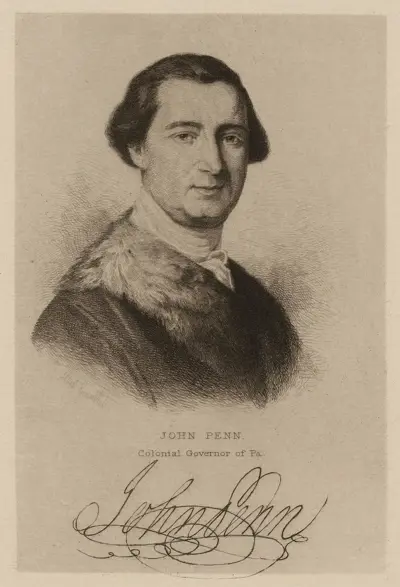
John Penn was the last governor of colonial Pennsylvania, serving in that office from 1763 to 1771 and from 1773 to 1776. Educated in Britain and Switzerland, he was also one of the Penn family proprietors of the Province of Pennsylvania from 1771 until 1776, holding a one-fourth share, when the creation of the independent Commonwealth of Pennsylvania during the American Revolution removed the Penn family from power.
