Charles Lee Quotes
Every good Englishman, abstracted from all regard for America, must oppose … being taxed by the British Parliament. For my own part, I am convinced that no argument … can be produced in support of this right.
Lee at that time was one of the leaders of the American colonists’ cause. He was born in England and was an old friend of Burgoyne who had just arrived in America. Lee wanted to explain the American viewpoint. Lee later became the senior major general under Washington.
Charles Lee, 1731-1782, English-born Revolutionary War General, Letter to British General John Burgoyne, 1775
Sourced by: Eigen's Political and Historical Quotations

This quotation is very important because it illustrates in the first of our great national political debates, the same views held by extreme, right wing anti-government, and Tea Party adherents regarding government in general and taxation in particular. See {634235} and {634234} for more of his arguments at the Ratification Convention.

The treaty ending the Revolutionary war guaranteed that the English bankers and merchants who had debts going back to before the American Revo
lution would have “no impediment” in collecting their debts in America. However, Rhode Island and Virginia in particular placed many impediments and made it virtually impossible for debts to be collected in their states. The John Jay led Supreme Court, in particular, overturned state actions on the grounds that they had implemented Patrick Henry’s sentiment and hence violated the treaty.

Ministers refers to the Government Ministers, not to clergy.

The colonists in America had no representatives in Parliament. Galloway who opposed armed rebellion against Britain {621966} admitted that the British treatment of America was wrong but saw other solutions. It will never be known if any of them might have worked. The world would have been very different had they been tried.

This resolution of independence was voted upon a month before the Declaration of Independence. It was approved by 12 of the colonies but not by New York. The Congress appointed a committee to draft what became the Declaration of Independence and that was approved by all the colonies. The resolution was introduced by Richard Henry Lee on instructions from Virginia. The graphic is of Lee’s original notes.

As a result was in 1799 he was indicted, convicted, and fined $480 and sentenced to 18 months in jail. In 1801, newly elected President Thomas Jefferson pardoned Brown along with all violators of the act.


This was written more than a year before the American Revolution Battles began. It took time to ship the men and supplies to America and the British did not handle that task with much efficiency. See {636926} for another of the King’s statements.


The Stamp Act had caused much consternation among the colonies. The Continental Congress had gone into session to draft a petition to the King asking that the Act not be enforced. This letter described the chalenge before them. See {589421} for one of the more contentious passages the delegates had to work out.

This was one of the first and is considered the best of the Colonial writings against taxation without representation. Despite this, Dulany is not well known in American history because when the Revolution finally came he was a loyalist.
This was one of the first and is considered the best of the Colonial writings against taxation without representation. Despite this, Dulany is not well known in American history because when the Revolution finally came he was a loyalist.


While the official battles of the American Revolution did not begin until 1776, parts of the American colonies were in a de facto state of rebellion and the British could not enforce their laws. See {636925} for another of the King’s statements.


Some of the Patriots of Early America realized that the oppressions of British rule were coming from Parliament and initially took the position that only the King could make laws for the colonies and not Parliament. Therefore, they were as Englishmen challenging illegal English laws. Most American hostility was directed at Parliament and not the King. However, once there was any physical resistance, King George came down with such a heavy hand that American hatred transferred to him. For related quotes on the King/Parliament issue, see {639145}, {639144}, {639142}, {639141}, {639140}, & {639137}


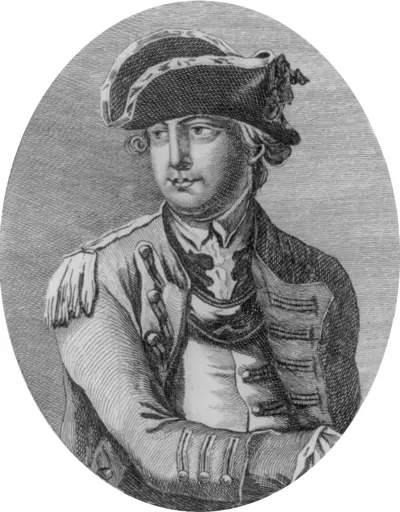
Charles Henry Lee served as a general of the Continental Army during the American Revolutionary War. He also served earlier in the British Army during the Seven Years War. He sold his commission after the Seven Years War and served for a time in the Polish army of King Stanislaus II.
