Connecticut Quotes
That every tax imposed upon English subjects without consent is against the natural rights and the bounds prescribed by the English constitution. That the Stamp Act in special, is a tax imposed on the colonies without their consent. That it is the duty of every person in the colonies to oppose by every lawful means the execution of those acts imposed on them…
Connecticut Resolutions on the Stamp Act, December 10, 1765
Sourced by: Eigen's Political and Historical Quotations


This quotation is very important because it illustrates in the first of our great national political debates, the same views held by extreme, right wing anti-government, and Tea Party adherents regarding government in general and taxation in particular. See {634235} and {634234} for more of his arguments at the Ratification Convention.

Wilkes was a strong advocate for the American cause—so much so that some in Parliament tried to deny him his seat in Parliament for his disloyal point of view.


As a result was in 1799 he was indicted, convicted, and fined $480 and sentenced to 18 months in jail. In 1801, newly elected President Thomas Jefferson pardoned Brown along with all violators of the act.

His advice was not taken. The result was as Franklin predicted.


Lee at that time was one of the leaders of the American colonists’ cause. He was born in England and was an old friend of Burgoyne who had just arrived in America. Lee wanted to explain the American viewpoint. Lee later became the senior major general under Washington.


The colonists in America had no representatives in Parliament. Galloway who opposed armed rebellion against Britain {621966} admitted that the British treatment of America was wrong but saw other solutions. It will never be known if any of them might have worked. The world would have been very different had they been tried.

This was one of the first and is considered the best of the Colonial writings against taxation without representation. Despite this, Dulany is not well known in American history because when the Revolution finally came he was a loyalist.
At the beginning of the dispute between America and England, the issue was the raising of internal American taxes by Parliament without any American representation in Parliament. The issue escalated and when the British began using force, independence then became the American objective.
This was one of the first elucidations of this principle which became so important for the American union and Revolution. The 1754 debate was over Franklin's public effort for a Colonial Federation (see {37005}, {37006}, & {583424}). Shirley liked the idea but thought that the King of England should appoint the members of a Colonial Congress. This was Franklin's counter, arguing that each colony should elect its own members.

The British had closed Boston Harbor until the English merchants who lost their goods at the Boston Tea Party were paid for their damages. A convention was called to discuss a response to the closing of Boston Harbor and New York City convened a public meeting to come up with instructions for their delegates to the conference. One amazing thing was that they advocated a boycott of English goods. What was amazing was that there was no nation and New York and Massachusetts were separate entities and sectionalism was rife, yet New Yorkers were willing to sacrifice to help Bostonians. The New York sacrifice was all the greater because most of the imports from England landed at New York harbor where there was work created for New Yorkers and business for New York companies. New York stood to lose the most with a boycott. Philadelphia which also advocated a boycott, lost little as they were not a harbor for imports. New Yorkers also provided assistance to their competitors, the Bostonians who were out of work. See {589413}.

The Stamp Act had caused much consternation among the colonies. The Continental Congress had gone into session to draft a petition to the King asking that the Act not be enforced. This letter described the chalenge before them. See {589421} for one of the more contentious passages the delegates had to work out.


This is one of the most fascinating documents of the American Revolution. The British Parliament had passed the very unpopular Stamp Act, a form of tax that required a government stamp, which had to be paid for, to be placed on all legal documents from leases to wills. Governor Bernard opposed the Stamp Act and was trying to have the Colonies exempted (See {613881}). The assembly while apparently advocating obedience to the law and warning the Governor of the possibility of Colonists boycotting legal instruments, actually laid out the strategy and the legal defense for a boycott and provided a revolutionary blueprint for colonists to follow.
The American Revolution’s ideas spread. This Cahier was the consensus of the Clergy of Blois in 1789. There were cahiers of several provinces of France—some by the clergy, some by the nobles. What is fascinating is the emergence of many of the pre-Revolutionary French concepts. The example of the American revolution and its principles was known throughout the educated classes of France.
This was one of the first and is considered the best of the Colonial writings against taxation without representation. Despite this, Dulany is not well known in American history because when the Revolution finally came he was a loyalist.

While the official battles of the American Revolution did not begin until 1776, parts of the American colonies were in a de facto state of rebellion and the British could not enforce their laws. See {636925} for another of the King’s statements.


This is the same man who introduced the Stamp Act 12 years before which started the whole problem in America. See {74956}.
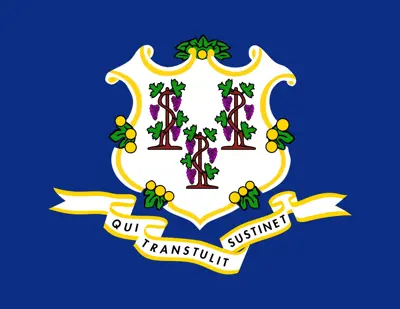
Connecticut (/kəˈnɛtɪkət/ (listen)) is the southernmost state in the New England region of the United States. As of the 2010 Census, it has the highest per-capita income, second-highest level of human development behind Massachusetts, and highest median household income in the United States. It is bordered by Rhode Island to the east, Massachusetts to the north, New York to the west, and the Long Island Sound to the south. Its capital is Hartford and its most populous city is Bridgeport. Historically the state is part of New England as well as the tri-state area with New York and New Jersey, which together make up metropolitan New York City. The state is named for the Connecticut River which approximately bisects the state. The word "Connecticut" is derived from various anglicized spellings of “Quononoquett (Conanicut),” a Mohegan-Pequot word for "long tidal river".
