John Kenneth Galbraith Quotes
The American colonies, all know, were greatly opposed to taxation without representation. They were also, a less celebrated quality, equally opposed to taxation with representation.
Galbraith, John Kenneth. Money: Whence It Came, Where It Went. Houghton Mifflin, 1975, p. 55.


This quotation is very important because it illustrates in the first of our great national political debates, the same views held by extreme, right wing anti-government, and Tea Party adherents regarding government in general and taxation in particular. See {634235} and {634234} for more of his arguments at the Ratification Convention.


It was repealed the next year, but much damage had been done to the relationship between the American Colonists and the mother country. It set the tone for American transition to a desire for independence. . Fox, a conservative on most issues was an absolute radical on the issue of America. To aggravate the hawks in parliament, he used to dress in the colors of George Washington’s uniform to show his support once the war broke out.
The Iraqi Prime Minister was a Shiite autocrat who had a winner take all approach to government and other than putting token Sunnis and Kurds in the Cabinet ran a very discriminatory government and could muster no loyalty with Kurds and Shiites.

This was one of the first and is considered the best of the Colonial writings against taxation without representation. Despite this, Dulany is not well known in American history because when the Revolution finally came he was a loyalist.


Wilkes was a strong advocate for the American cause—so much so that some in Parliament tried to deny him his seat in Parliament for his disloyal point of view.
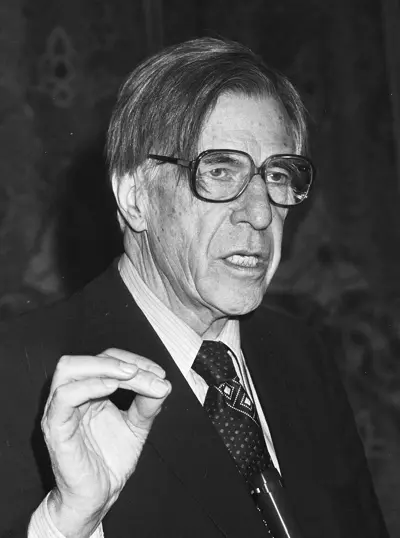
John Kenneth Galbraith OC, also known as Ken Galbraith, was a Canadian-American economist, diplomat, public official and intellectual. A leading proponent of 20th-century American liberalism, his books on economic topics were bestsellers from the 1950s through the 2000s. As an economist, he leaned toward post-Keynesian economics from an institutionalist perspective.
