John Stuart Mill Quotes
...it is not only the general principles of justice that are infringed, or at least set aside, by the exclusion of women, merely as women, from any share in the representation; that exclusion is also repugnant to the particular principles of the British Constitution. It violates one of the oldest of our constitutional maxims...that taxation and representation should be co-extensive. Do not women pay taxes?
Mill, John Stuart. Speech on the Representation of the People Bill, 20 May 1867. Hansard's Parliamentary Debates, 3rd series, vol. 187, Cornelius Buck, 1867, col. 817.


The concept of taxpayers being entitled to vote to avoid taxation without representation was fundamental to the Founding Fathers. However, the only people who paid taxes were those who owned property as there was no income tax at the time. Since the male controlled the family property, not allowing women to vote did no injury to the basic principle. However, the sexist attitude of the times ran up against this basic principles in the case of widows and unmarried women who owned property. Faced with this contradiction, some of the Founding Fathers like Lee actually favored the voting franchise for women who were widows and property owners or even unmarried female property owners. There were not enough people who saw this contradiction so that all women were originally prohibited from voting, but this quotation shows that it was a political issue at the time.

This was more than 30 years earlier than the United States.

The editorial was in support of women’s suffrage—the right to vote which at the time women did not have in Britain. Women were very active in protests and demonstrations. Tactics sometimes involved civil disobedience and chaining themselves to public buildings. It was the civil disobedience and disruptions that the newspaper referred to as the “follies and excesses.” In retrospect today, it is amazing how threatened the society felt and how they reacted to the “threat” of females voting. It does however give us a perspective on those contemporary societies which restrict women’s voting rights.


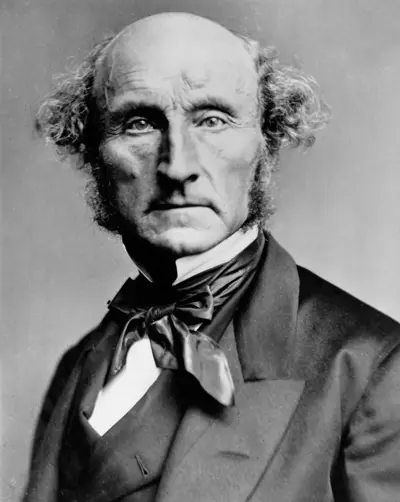
John Stuart Mill, usually cited as J. S. Mill, was an English philosopher, political economist, Member of Parliament, and civil servant. One of the most influential thinkers in the history of classical liberalism, he contributed widely to social theory, political theory, and political economy. Dubbed "the most influential English-speaking philosopher of the nineteenth century", he conceived of liberty as justifying the freedom of the individual in opposition to unlimited state and social control.
