Elizabeth Cady Stanton Quotes
Resolved, That such laws as conflict, in any way with the true and substantial happiness of woman, are contrary to the great precept of nature and of no validity, for this is "superior in obligation to any other. Resolved, That woman is man's equal was intended to be so by the Creator, and the highest good of the race demands that she should be recognized as such. Resolved, That it is the duty of the women of this country to secure to themselves their sacred right to the elective franchise.
Elizabeth Cady Stanton, 1815-1902, First President, National Woman Suffrage Association, The Seneca Falls Declaration, 1848
Sourced by: Eigen's Political and Historical Quotations


The editorial was in support of women’s suffrage—the right to vote which at the time women did not have in Britain. Women were very active in protests and demonstrations. Tactics sometimes involved civil disobedience and chaining themselves to public buildings. It was the civil disobedience and disruptions that the newspaper referred to as the “follies and excesses.” In retrospect today, it is amazing how threatened the society felt and how they reacted to the “threat” of females voting. It does however give us a perspective on those contemporary societies which restrict women’s voting rights.


This was de facto Equal Rights legislation.


The classification of women with criminals and lunatics referred to the fact that at this time Women could not vote in New Zealand or any other nation of the world. The following year, much as a result of her efforts, New Zealand became the first country in the world to allow women to vote.

She was the first presidential candidate's wife to admit such a radical position.

Although most politicians of the time opposed voting rights, Harding, whose wife was herself a suffragette, and an accomplished woman, tried to lead the nation in the new direction of female equality. It was one of the few laudatory things he did in an otherwise lap luster presidency.


Woodrow Wilson had just finished speaking to the convention – see {638532}. This statement was thought be some to be insulting to the President who said he favored the right of women to vote, but did very little if anything to make that happen. Although Shaw was an ordained Methodist Minister, the Methodist Episcopal Church refused to allow her to preach because of her suffrage views.


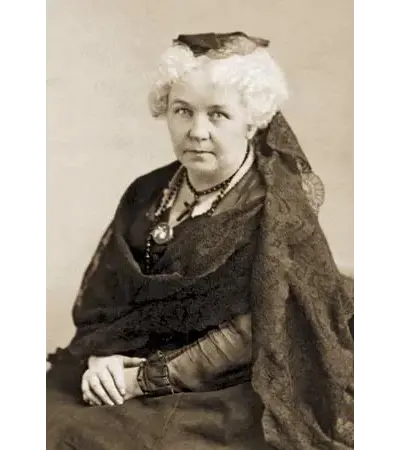
Elizabeth Cady Stanton was a leader of the women's rights movement in the U.S. during the mid- to late-1800s. She was the main force behind the 1848 Seneca Falls Convention, the first convention to be called for the sole purpose of discussing women's rights, and was the primary author of its Declaration of Sentiments. Her demand for women's right to vote generated a controversy at the convention but quickly became a central tenet of the women's movement. She was also active in other social reform activities, especially abolitionism.
