Warren G. Harding Quotes
With the nation-wide induction of womanhood into our political life, we may count upon her intuitions, her refinements, her intelligence, and her influence to exalt the social order. We count upon her exercise of the full privileges and the performance of the duties of citizenship to speed the attainment of the highest state.
Although most politicians of the time opposed voting rights, Harding, whose wife was herself a suffragette, and an accomplished woman, tried to lead the nation in the new direction of female equality. It was one of the few laudatory things he did in an otherwise lap luster presidency.
Warren G. Harding, 1865-1923, 29th President of the United States (Republican, OH), Inaugural Address, March 4, 1921
Sourced by: Eigen's Political and Historical Quotations


This was de facto Equal Rights legislation.

None of the other parties had any women candidates. The Communists got a lot of votes from women whose only way they could support the participation of women in Italian politics, was to vote for a Communist candidate. And people who were opposed to non-traditional roles for women then conflated the feminists and the Communists just as had been done in America, England and many other countries and accused all feminists of being communists.

She was the first presidential candidate's wife to admit such a radical position.


She was prescient. The amendment was never ratified by enough states.

This remarkable statement was written in about 1840 and there was probably then few people of either gender who would think such a thing possible.


The party was not yet ready for women voting. Hardie resigned as Party Leader. In 1910 he agreed to return as Party Leader and the party was then not in opposition to women’s suffrage although many members were still against women voting.


First female presidential candidate & first divorcee to run for that office. The half to which she was referring were the females, who by many narrow laws were unable to participate in the intellectual and political life of the country. At the time, women could not even vote.


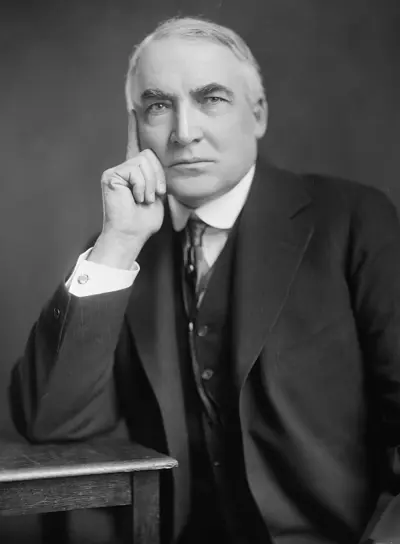
Warren Gamaliel Harding was the 29th president of the United States, serving from 1921 until his death in 1923. A member of the Republican Party, he was one of the most popular U.S. presidents to that point. After his death, a number of scandals, including Teapot Dome, came to light, as did his extramarital affair with Nan Britton; those eroded his popular regard.
