Lyman Trumbull Quotes
Women are citizens, children are citizens; but they do not exercise the elective franchise by virtue of their citizenship.
Lyman Trumbull, 1813-1896, U. S. Senator (Illinois), Debate on the civil rights bill of 1866, April 4, 1866
Sourced by: Eigen's Political and Historical Quotations


The following year, women got the right to vote, the first nation to reach that level of enlightenment.


What is interesting, that few people realize, is that large number of men who had never voted before, and would not be able to vote afterwards (the were not property owners for example), were allowed to vote in the ratification debate. As a result, an entire new socio-economic class was empowered and became interested in politics for the first time in history. The result was greater and wider public interest than there had been or would be for many years to come. All voting requirements had been set by the states and were still so after the Constitution was adapted and still is the current situation, although there has been a constant battle in many states to keep Blacks and other minorities from voting between the desires of the states and Federal pressure after the Civil War Constitutional amendments.

Although most politicians of the time opposed voting rights, Harding, whose wife was herself a suffragette, and an accomplished woman, tried to lead the nation in the new direction of female equality. It was one of the few laudatory things he did in an otherwise lap luster presidency.

At the time less than 10% of the Southern Blacks were allowed to vote. The result was that Southern segregationists were elected to Congress even in a state like Mississippi which had a majority Black population, The Southern segregationist bloc was large enough that with a few very conservative Republicans, they formed a coalition could block any civil rights legislation including voting rights reform,

First woman elected to Congress. Women could vote in Montana years before women had the right to vote nationally. Women pioneers were critical contributors to an extremely hard life. Many widows and single women ran farms and ranches, fought raiding Indians, and married pioneer women were necessary to survival.


Also in a letter to a newspaper, June 13, 1836

Miller was the first Black American admitted to a Graduate Program—Johns Hopkins—in Mathematics. Women were not then universally allowed to vote and suffrage was a major issue. Miller, like many Black males, was opposed to female suffrage. The prospect of many women holding public office was to him so absurd that the potential prospect was sufficient to oppose women voting.

This was de facto Equal Rights legislation.

First female presidential candidate & first divorcee to run for that office. The half to which she was referring were the females, who by many narrow laws were unable to participate in the intellectual and political life of the country. At the time, women could not even vote.


The issue was the voting franchise for Negroes in the aftermath of the Civil War.


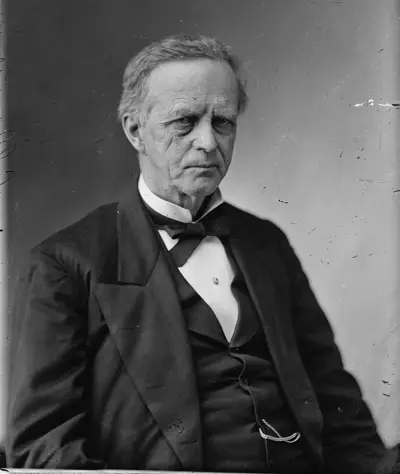
Lyman Trumbull was a United States Senator from Illinois and the co-author of the Thirteenth Amendment to the United States Constitution.
