Lucy Stone Quotes
The great majority of women are more intelligent, better educated, and far more moral than multitudes of men whose right to vote no man questions.
Lucy Stone, 1818-1893, Founder, National American Woman Suffrage Association, Founder, Women's Journal, Quoted in Diana Star Helmer, Women Suffragists
Sourced by: Eigen's Political and Historical Quotations


The editorial was in support of women’s suffrage—the right to vote which at the time women did not have in Britain. Women were very active in protests and demonstrations. Tactics sometimes involved civil disobedience and chaining themselves to public buildings. It was the civil disobedience and disruptions that the newspaper referred to as the “follies and excesses.” In retrospect today, it is amazing how threatened the society felt and how they reacted to the “threat” of females voting. It does however give us a perspective on those contemporary societies which restrict women’s voting rights.


The classification of women with criminals and lunatics referred to the fact that at this time Women could not vote in New Zealand or any other nation of the world. The following year, much as a result of her efforts, New Zealand became the first country in the world to allow women to vote.

This quotation is an example of how even sophisticated institutions and leaders were plagued by various stereotypes. Dean Sperry as well as many other members of the clergy actually believed that women would not go to divinity school because they were interested in the theology but because they were looking to marry a minister. When the dean told the trustees that he had “no wisdom on this matter” is was one of the great understatements in the history of quotations. What is more ironic is that the Dean was considered very liberal having admitted Catholics, Nazarenes, and Adventists.


Some men in the audience hissed as she took the podium.
The following year, women got the right to vote, the first nation to reach that level of enlightenment.
Her audiences were all familiar with the Adam & Eve Biblical narration.


Samuel Langhorne Clemens, 1835-1910. This is an excellent example of political sarcasm. Read literally, this quotation indicates that he was opposed to women’s suffrage, and was a fairly extreme sexist. What he was doing however, is stating publicly the argument that many men made at the time—especially those who were not highly literate or well-educated. By stating the argument of the opposition, he allows fair minded people to be exposed to views that they might otherwise not be exposed to. Many sexist men at the time read the quotation and, not appreciating Twain’s sarcasm, concluded that Twain, unlike most of the “egghead intellectuals” of the day was an opponent of the increasingly militant feminists. In actuality, Mark Twain was a strong feminist. See {630191}, {630192}, & {630193}.


She was then an invalid trying to recover from the toll of all her work at the front lines of wars had taken. The men she had so helped, did not return the gesture when it came to voting, She did not live to see women get the vote in America.


He was a major critic of French Quebec Separatism and some elements of French Canadian culture including his perception of sexism. His French Quebec Separatist enemies translated passages of this work into French and (some say deliberately) mistranslated this line to read: Quebec women are sows. The quotation was bandied about Canada in the original version as well as the mistranslation.


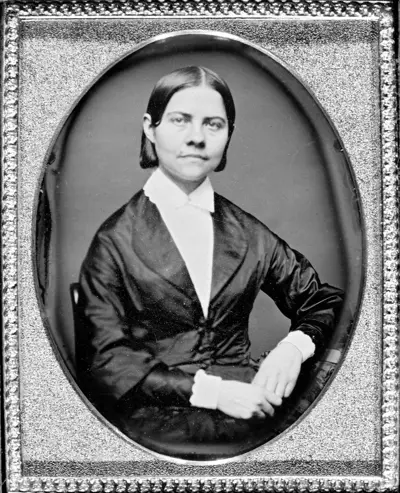
Lucy Stone was a prominent U.S. orator, abolitionist, and suffragist, and a vocal advocate and organizer promoting rights for women. In 1847, Stone became the first woman from Massachusetts to earn a college degree. She spoke out for women's rights and against slavery. Stone was known for using her birth name after marriage, the custom being for women to take their husband's surname.
