Thomas Wentworth Higginson Quotes
All theories of chivalry and generosity and vicarious representation fall, before the fact that woman has been grossly wronged by man. That being the case, the only modest and honest thing for man to do is to say, "Henceforward have a voice in making your own laws." Till this is done, she has no sure safeguard, since otherwise the same men who made the old barbarous laws may at any time restore them.
Thomas Wentworth Higginson, 1823–1911, Unitarian Minister, Author, Abolitionist, Feminist, Reformer & Soldier., Women and the Alphabet, 1881
Sourced by: Eigen's Political and Historical Quotations


Referring to new laws that would be necessary after a proposed Declaration of Independence:


She was the first presidential candidate's wife to admit such a radical position.

She was chiding the Egyptian military who in the Arab Spring, turned on demonstrators and soldiers in the middle of the central square stripped a female demonstrator half naked and beat her badly;

She is vehemently opposed to allowing women to serve in the armed forces.

Although born and educated in the United States, she lived mostly in England and was politically active there.

Some men in the audience hissed as she took the podium.

First female presidential candidate & first divorcee to run for that office


Billinghurst was physically handicapped without the use of her legs. She protested and marched in protest parades using a hand propelled tricycle which the police sometimes dumped her out of and left her immobile in alleys.

At the time, the entertainment industry, while it was open to female entertainers and writers, has been male dominated for years. Very few women were directors, producers, or executives who controlled power or money.


Given the time, this was an amazing demand. Fuller preceded all the more famous American feminists and was an inspiration to them.


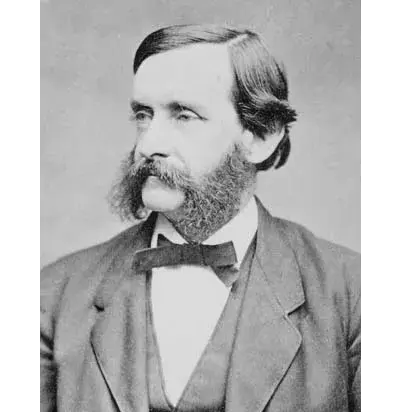
Thomas Wentworth Higginson was an American Unitarian minister, author, abolitionist, and soldier. He was active in the American Abolitionism movement during the 1840s and 1850s, identifying himself with disunion and militant abolitionism. He was a member of the Secret Six who supported John Brown. During the Civil War, he served as colonel of the 1st South Carolina Volunteers, the first federally authorized black regiment, from 1862–1864. Following the war, Higginson devoted much of the rest of his life to fighting for the rights of freed people, women and other disfranchised peoples.
