Jeannette Rankin Quotes
Women got the vote in Montana because the spirit of pioneer days is still alive.
First woman elected to Congress. Women could vote in Montana years before women had the right to vote nationally. Women pioneers were critical contributors to an extremely hard life. Many widows and single women ran farms and ranches, fought raiding Indians, and married pioneer women were necessary to survival.
Jeannette Rankin, 1880-1973, U. S. Congresswoman (Republican, MT), Explanation of her unprecedented victory, November 7, 1916
Sourced by: Eigen's Political and Historical Quotations


The editorial was in support of women’s suffrage—the right to vote which at the time women did not have in Britain. Women were very active in protests and demonstrations. Tactics sometimes involved civil disobedience and chaining themselves to public buildings. It was the civil disobedience and disruptions that the newspaper referred to as the “follies and excesses.” In retrospect today, it is amazing how threatened the society felt and how they reacted to the “threat” of females voting. It does however give us a perspective on those contemporary societies which restrict women’s voting rights.


The speaker predicted the 19th Amendment to the Constitution, but was off by three years.

She was the first presidential candidate's wife to admit such a radical position.


None of the other parties had any women candidates. The Communists got a lot of votes from women whose only way they could support the participation of women in Italian politics, was to vote for a Communist candidate. And people who were opposed to non-traditional roles for women then conflated the feminists and the Communists just as had been done in America, England and many other countries and accused all feminists of being communists.

The Organization's Periodical. The statement was repeated several times in variation between 1890 and 1920. This organization was the national leader of similar organizations in over 20 States. Many notables were involved including Louis D. Brandeis, Francis Parkman and John Lowell.


It would be over 30 years more before American women could vote for President. Lockwood never could.


She was referring to a letter which she had sent to her husband, John Adams.


Many people, mostly men, tended to regard and label the militant suffragettes as extremists and allowed as how women who advocated their voting rights but in an acceptable way might be wrong but they were at least ladies. The same kind of attempted split occurred in the latter half of the 20th century over the Woman’s movement. The Feminists were not “ladies” and were not to be emulated by normal women even if they had sympathy for he views. Groups without power have always been acceptable to society as long as their cries for a share of power were ineffectual and did not disrupt the existing order. But when they begin to use more successful means and are heard and attended to, then they are labeled as extremists not to be emulated by “decent” people.


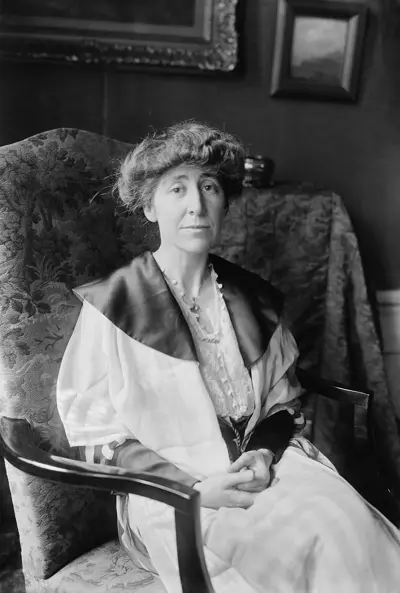
Jeannette Pickering Rankin was an American politician and women's rights advocate, and the first woman to hold federal office in the United States. She was elected to the U.S. House of Representatives as a Republican from Montana in 1916, and again in 1940.
