Boston Daily Transcript Quotes
The ladies actively working to secure the cooperation of their sex in caucuses and citizens' conventions are not actuated by love of notoriety, and are not, therefore, to be classed with the absolute woman suffragists.
Many people, mostly men, tended to regard and label the militant suffragettes as extremists and allowed as how women who advocated their voting rights but in an acceptable way might be wrong but they were at least ladies. The same kind of attempted split occurred in the latter half of the 20th century over the Woman’s movement. The Feminists were not “ladies” and were not to be emulated by normal women even if they had sympathy for he views. Groups without power have always been acceptable to society as long as their cries for a share of power were ineffectual and did not disrupt the existing order. But when they begin to use more successful means and are heard and attended to, then they are labeled as extremists not to be emulated by “decent” people.
Boston Daily Transcript, September 1, 1879
Sourced by: Eigen's Political and Historical Quotations


Having passed this law, the state legislature turned down subsequent efforts to expand the female voting franchise, and Wisconsin women had to wait until all American women finally got the right to vote.


She was the first presidential candidate's wife to admit such a radical position.

Samuel Langhorne Clemens, 1835-1910


First woman elected to Congress. Women could vote in Montana years before women had the right to vote nationally. Women pioneers were critical contributors to an extremely hard life. Many widows and single women ran farms and ranches, fought raiding Indians, and married pioneer women were necessary to survival.

Although Campaigning in the heart of the conservative Midwest, she had no compunction about advocating women’s suffrage.


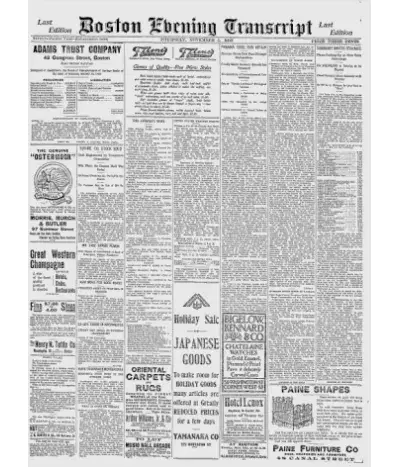
The Boston Evening Transcript was a daily afternoon newspaper in Boston, Massachusetts, published from July 24, 1830, to April 30, 1941.
