Wisconsin Quotes
Women may vote in any election pertaining to school matters.
Having passed this law, the state legislature turned down subsequent efforts to expand the female voting franchise, and Wisconsin women had to wait until all American women finally got the right to vote.
Wisconsin, State law giving women a limited right to vote, 1886
Sourced by: Eigen's Political and Historical Quotations


The editorial was in support of women’s suffrage—the right to vote which at the time women did not have in Britain. Women were very active in protests and demonstrations. Tactics sometimes involved civil disobedience and chaining themselves to public buildings. It was the civil disobedience and disruptions that the newspaper referred to as the “follies and excesses.” In retrospect today, it is amazing how threatened the society felt and how they reacted to the “threat” of females voting. It does however give us a perspective on those contemporary societies which restrict women’s voting rights.

Although liberal on many other issues, women voting was anathema to him.


Howe said women should be officially deprived of the ballot because of this reason.


The speaker predicted the 19th Amendment to the Constitution, but was off by three years.


She was then an invalid trying to recover from the toll of all her work at the front lines of wars had taken. The men she had so helped, did not return the gesture when it came to voting, She did not live to see women get the vote in America.


Hunt gave as an example Mary Smith of Stanmore. This quotation is very interesting in the history of women’s suffrage. Hunt was a strong advocate for Universal Suffrage (See {616653}.) At the time, even men had to be a taxpayer and own a sufficient amount of property to vote. Less than 20% of the population of Britain were allowed to vote. The argument at the time was that the husband would represent the family’s interest at the ballot box and there was no need for women to vote. But by facing parliament with the logical inconsistency of its position, he was able to make his point, although there were very few women like Mary Smith who were single and had the economic resources to qualify. Most widows remarried so even if they had economic resources, there was a man who could assume the then perceived role of head of the household.

Miller was the first Black American admitted to a Graduate Program—Johns Hopkins—in Mathematics. Women were not then universally allowed to vote and suffrage was a major issue. Miller, like many Black males, was opposed to female suffrage. The prospect of many women holding public office was to him so absurd that the potential prospect was sufficient to oppose women voting.

She was the first presidential candidate's wife to admit such a radical position.

Many people, mostly men, tended to regard and label the militant suffragettes as extremists and allowed as how women who advocated their voting rights but in an acceptable way might be wrong but they were at least ladies. The same kind of attempted split occurred in the latter half of the 20th century over the Woman’s movement. The Feminists were not “ladies” and were not to be emulated by normal women even if they had sympathy for he views. Groups without power have always been acceptable to society as long as their cries for a share of power were ineffectual and did not disrupt the existing order. But when they begin to use more successful means and are heard and attended to, then they are labeled as extremists not to be emulated by “decent” people.

Samuel Langhorne Clemens, 1835-1910


It would be over 30 years more before American women could vote for President. Lockwood never could.
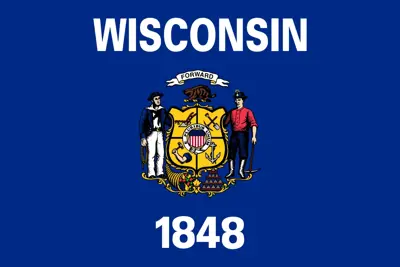
Wisconsin (/wɪˈskɒnsɪn/ (listen)) is a state in the upper Midwestern United States, bordered by Minnesota to the west; Iowa to the southwest; Illinois to the south; Lake Michigan to the east; Michigan to the northeast; and Lake Superior to the north. Wisconsin is the 23rd-largest state by total area and the 20th-most populous.
