Mark Twain Quotes
I not only advocate it now, but have advocated it earnestly for the last fifty years. As to the militant suffragettes, I have noted that many women believe in militant methods. You might advocate one way of securing the rights and I might advocate another, they both might help to bring about the result desired. To win freedom always involves hard fighting. I believe in women doing what they deem necessary to secure their rights.
Samuel Langhorne Clemens, 1835-1910
Mark Twain, Writer, Founder, Anti-Imperialist League, View on women’s suffrage, Interview, Chicago Daily Tribune, December 21, 1909
Sourced by: Eigen's Political and Historical Quotations

Samuel Langhorne Clemens, 1835-1910. This is an excellent example of political sarcasm. Read literally, this quotation indicates that he was opposed to women’s suffrage, and was a fairly extreme sexist. What he was doing however, is stating publicly the argument that many men made at the time—especially those who were not highly literate or well-educated. By stating the argument of the opposition, he allows fair minded people to be exposed to views that they might otherwise not be exposed to. Many sexist men at the time read the quotation and, not appreciating Twain’s sarcasm, concluded that Twain, unlike most of the “egghead intellectuals” of the day was an opponent of the increasingly militant feminists. In actuality, Mark Twain was a strong feminist. See {630191}, {630192}, & {630193}.


Some men in the audience hissed as she took the podium.


This was de facto Equal Rights legislation.


Ingersoll was considered to be the greatest orator and political thinker of his day, but his overt atheistic views curtailed his elected political career.


To support the war effort, the most militant suffragettes ceased anti Government militancy. The suffragette movement was split by WWI and the issue of pacifism. See {621266} for the anti-war factional view.


She was the first presidential candidate's wife to admit such a radical position.

First female presidential candidate & first divorcee to run for that office

None of the other parties had any women candidates. The Communists got a lot of votes from women whose only way they could support the participation of women in Italian politics, was to vote for a Communist candidate. And people who were opposed to non-traditional roles for women then conflated the feminists and the Communists just as had been done in America, England and many other countries and accused all feminists of being communists.
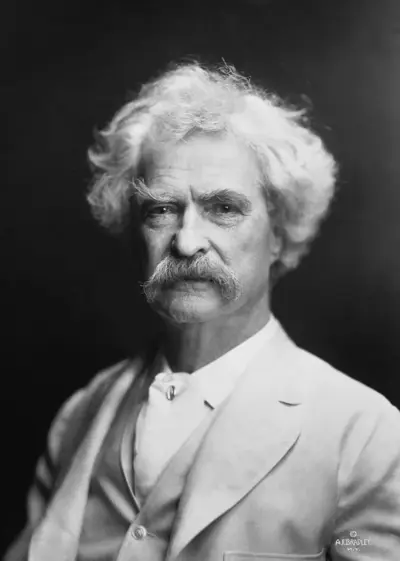
- Born: November 30, 1835
- Died: April 21, 1910
- Nationality: American
- Profession: Author
Samuel Langhorne Clemens, known by his pen name Mark Twain, was an American writer, humorist, entrepreneur, publisher, and lecturer. He was lauded as the "greatest humorist the United States has produced," and William Faulkner called him "the father of American literature". His novels include The Adventures of Tom Sawyer (1876) and its sequel, the Adventures of Huckleberry Finn (1884), the latter often called "The Great American Novel".
