Wisconsin Quotes
Women shall have the same rights and privileges under the law as men in the exercise of suffrage ... and in all other respects.
This was de facto Equal Rights legislation.
Wisconsin, Law, 1921
Sourced by: Eigen's Political and Historical Quotations

The case was a protest against the 1921 law which gave equal rights to women of Wisconsin. See {587976}.

This remarkable statement was written in about 1840 and there was probably then few people of either gender who would think such a thing possible.


See Belva Lockwood {609865} for the view of the woman who lobbied heavily for the law and became the first woman to practice before the Supreme Court.


She was overly optimistic. She would be dead for 30 years before women got the vote and some would argue that full equality has not been reached yet.

Miller was the first Black American admitted to a Graduate Program—Johns Hopkins—in Mathematics. Women were not then universally allowed to vote and suffrage was a major issue. Miller, like many Black males, was opposed to female suffrage. The prospect of many women holding public office was to him so absurd that the potential prospect was sufficient to oppose women voting.

It would be over 30 years more before American women could vote for President. Lockwood never could.


Samuel Langhorne Clemens, 1835-1910

The editorial was in support of women’s suffrage—the right to vote which at the time women did not have in Britain. Women were very active in protests and demonstrations. Tactics sometimes involved civil disobedience and chaining themselves to public buildings. It was the civil disobedience and disruptions that the newspaper referred to as the “follies and excesses.” In retrospect today, it is amazing how threatened the society felt and how they reacted to the “threat” of females voting. It does however give us a perspective on those contemporary societies which restrict women’s voting rights.

She was referring to a letter which she had sent to her husband, John Adams.

This relatively radical viewpoint regarding equal rights for women was expressed by Roosevelt as his Senior thesis at Harvard in 1880. In those days, the kind of scrutiny of everything a candidate ever wrote or said that is characteristic of modern politics, did not exist. It is very doubtful that if the Republican Party officials had ever known that he had espoused these views—even as a young student, that he ever would have risen so high in the party, much less get nominated at the Vice Presidential candidate which was his entree to the Presidency. When in office however, there is no record of him reviving his youthful proposal that women who marry retain their maiden names.

Although most politicians of the time opposed voting rights, Harding, whose wife was herself a suffragette, and an accomplished woman, tried to lead the nation in the new direction of female equality. It was one of the few laudatory things he did in an otherwise lap luster presidency.


She was the first presidential candidate's wife to admit such a radical position.

First female presidential candidate & first divorcee to run for that office. The half to which she was referring were the females, who by many narrow laws were unable to participate in the intellectual and political life of the country. At the time, women could not even vote.


Stowe persuaded Lockwood to stand for President. They tried to recruit a man for the Vice Presidential nomination, and when they could not, Stowe became the first female to become a Vice Presidential candidate.
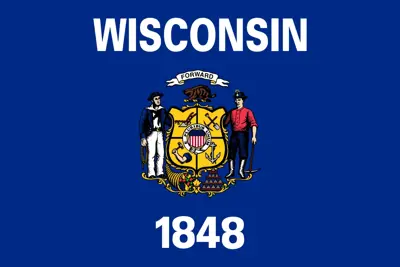
Wisconsin (/wɪˈskɒnsɪn/ (listen)) is a state in the upper Midwestern United States, bordered by Minnesota to the west; Iowa to the southwest; Illinois to the south; Lake Michigan to the east; Michigan to the northeast; and Lake Superior to the north. Wisconsin is the 23rd-largest state by total area and the 20th-most populous.
