Sandra Day O'Connor Quotes
Once women got the right to vote, the kind of relaxed about everything. It was not until after World War II that women discovered that they did not have equal opportunity in the workplace.... The result was almost a revolution.
Sandra Day O'Connor, U. S. Supreme Court Justice, C-SPAN Booknotes, April 9, 2003
Sourced by: Eigen's Political and Historical Quotations

See Belva Lockwood {609865} for the view of the woman who lobbied heavily for the law and became the first woman to practice before the Supreme Court.

Many politicians in that day would campaign from large carts drawn by oxen – a predecessor to the bandwagon of sorts. She was 1 of the 4 women who entered Oberlin College in 1837 thus becoming the first co-educational institution of higher education in the United States.

She was the first presidential candidate's wife to admit such a radical position.


She was overly optimistic. She would be dead for 30 years before women got the vote and some would argue that full equality has not been reached yet.

This was de facto Equal Rights legislation.

This is one of the earliest expressions of the now famous phrase.

The speaking to which she was referring was Christian Religious preaching by women. At the time it was considered by most Christians to be sacrilegious for women to preach. This came down from the orthodox Jewish tradition, and there are several passages in the New Testament where the Apostles, who were Jews themselves were echoing the religious tradition. This then took on a meaning that went beyond tradition as in Judaism. Margaret Fox wrote this essay which was a completely theological defense of a woman’s right – indeed obligation—to preach. Theologically, there are many Christian churches for whom her argument would be too radical—even in modern times. However, in the middle of the 17th century to most male clerics, this was so unfathomable that they did not even deign to refute her theological arguments. Meanwhile, the Quakers began to accept women in theological positions of influence—for ahead of most other Christian and Jewish sects. See {619836} and {619837} for quotations from the essay itself.

Some men in the audience hissed as she took the podium.


This quotation illustrates the statement of a reform principle to appease international interests in basic human rights. This type of statement provides the “fig leaf” for the UN and other organizations to pretend that international standards of human rights are being maintained. Nasser did not implement this principle. By the beginning of the 21st century, Egypt was finally making some progress on women’s equality issues. The prohibition on female members of Parliament—{586723}—had been reversed but women were still not allowed to be judges in a criminal trial, laws against infant female circumcision, and other elements of female equality were still not in existence.

Prior to WWII there were few women in the labor force, and the traditional “values” of American society relegated women to be homemakers. However with so many men under arms, there were not enough workers to achieve the war production that was necessary. So changes had to be made in public attitudes, not only towards women working, but the nature of the work that they are capable of and ought to be doing. So the government took a proactive role in changing public attitudes towards women in the workforce. It was a successful effort, and the sociological and psychological effects are still felt, half a century later. See {584781}.

This remarkable statement was written in about 1840 and there was probably then few people of either gender who would think such a thing possible.


Although the situation improved over time, all employers do not pay equal wages, although the laws now require equal pay.

Given the time, this was an amazing demand. Fuller preceded all the more famous American feminists and was an inspiration to them.

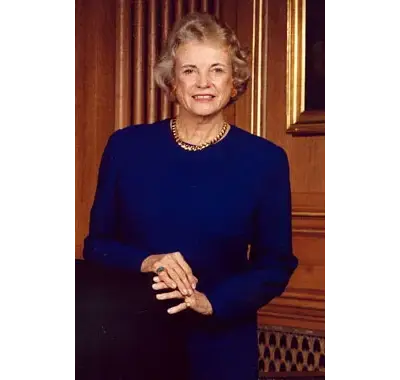
Sandra Day O'Connor is a retired attorney and politician who served as the first woman associate justice of the Supreme Court of the United States from 1981 to 2006. She was the first woman nominated and confirmed. Nominated by President Ronald Reagan, she was considered the swing vote for the Rehnquist Court and the beginning of the Roberts Court.
