Belva Lockwood Quotes
A woman running for President. There is not a thing in the Constitution to prohibit it. I cannot vote but I can be voted for.
It would be over 30 years more before American women could vote for President. Lockwood never could.
Belva Lockwood, 1830-1917, Attorney & Feminist, Presidential Candidate, Equal Rights Party, Statement, 1884
Sourced by: Eigen's Political and Historical Quotations


She was running for the Democratic Presidential Nomination.


This was de facto Equal Rights legislation.


Although liberal on many other issues, women voting was anathema to him.

First woman elected to Congress. Women could vote in Montana years before women had the right to vote nationally. Women pioneers were critical contributors to an extremely hard life. Many widows and single women ran farms and ranches, fought raiding Indians, and married pioneer women were necessary to survival.


Hunt gave as an example Mary Smith of Stanmore. This quotation is very interesting in the history of women’s suffrage. Hunt was a strong advocate for Universal Suffrage (See {616653}.) At the time, even men had to be a taxpayer and own a sufficient amount of property to vote. Less than 20% of the population of Britain were allowed to vote. The argument at the time was that the husband would represent the family’s interest at the ballot box and there was no need for women to vote. But by facing parliament with the logical inconsistency of its position, he was able to make his point, although there were very few women like Mary Smith who were single and had the economic resources to qualify. Most widows remarried so even if they had economic resources, there was a man who could assume the then perceived role of head of the household.

Miller was the first Black American admitted to a Graduate Program—Johns Hopkins—in Mathematics. Women were not then universally allowed to vote and suffrage was a major issue. Miller, like many Black males, was opposed to female suffrage. The prospect of many women holding public office was to him so absurd that the potential prospect was sufficient to oppose women voting.

The speaker predicted the 19th Amendment to the Constitution, but was off by three years.


The editorial was in support of women’s suffrage—the right to vote which at the time women did not have in Britain. Women were very active in protests and demonstrations. Tactics sometimes involved civil disobedience and chaining themselves to public buildings. It was the civil disobedience and disruptions that the newspaper referred to as the “follies and excesses.” In retrospect today, it is amazing how threatened the society felt and how they reacted to the “threat” of females voting. It does however give us a perspective on those contemporary societies which restrict women’s voting rights.
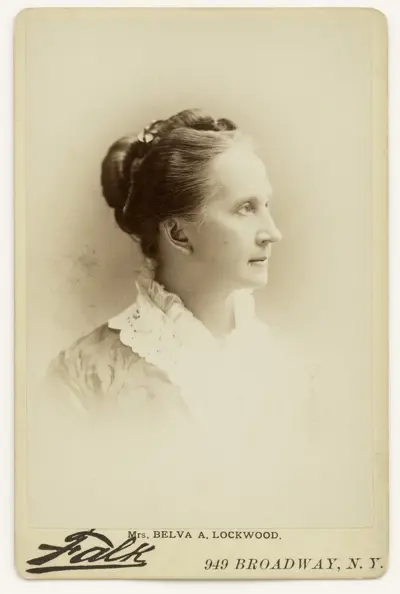
Belva Ann Bennett Lockwood was an American attorney, politician, educator, and author. She was active in working for women's rights, including women's suffrage. Lockwood overcame many social and personal obstacles related to gender restrictions. After college, she became a teacher and principal, working to equalize pay for women in education. She supported the movement for world peace, and was a proponent of the Temperance movement.
