Victoria Woodhull Quotes
Suffrage is a common right of citizenship. Women have the right of suffrage. Logically it cannot be escaped.
Woodhull, Victoria C. Memorial of Victoria C. Woodhull. U.S. House of Representatives, 41st Congress, 3rd Session, 19 Dec. 1870.

Although most politicians of the time opposed voting rights, Harding, whose wife was herself a suffragette, and an accomplished woman, tried to lead the nation in the new direction of female equality. It was one of the few laudatory things he did in an otherwise lap luster presidency.


Having passed this law, the state legislature turned down subsequent efforts to expand the female voting franchise, and Wisconsin women had to wait until all American women finally got the right to vote.

The editorial was in support of women’s suffrage—the right to vote which at the time women did not have in Britain. Women were very active in protests and demonstrations. Tactics sometimes involved civil disobedience and chaining themselves to public buildings. It was the civil disobedience and disruptions that the newspaper referred to as the “follies and excesses.” In retrospect today, it is amazing how threatened the society felt and how they reacted to the “threat” of females voting. It does however give us a perspective on those contemporary societies which restrict women’s voting rights.


The speaker predicted the 19th Amendment to the Constitution, but was off by three years.


She was referring to a letter which she had sent to her husband, John Adams.


Although liberal on many other issues, women voting was anathema to him.

This was de facto Equal Rights legislation.


The party was not yet ready for women voting. Hardie resigned as Party Leader. In 1910 he agreed to return as Party Leader and the party was then not in opposition to women’s suffrage although many members were still against women voting.


Hunt gave as an example Mary Smith of Stanmore. This quotation is very interesting in the history of women’s suffrage. Hunt was a strong advocate for Universal Suffrage (See {616653}.) At the time, even men had to be a taxpayer and own a sufficient amount of property to vote. Less than 20% of the population of Britain were allowed to vote. The argument at the time was that the husband would represent the family’s interest at the ballot box and there was no need for women to vote. But by facing parliament with the logical inconsistency of its position, he was able to make his point, although there were very few women like Mary Smith who were single and had the economic resources to qualify. Most widows remarried so even if they had economic resources, there was a man who could assume the then perceived role of head of the household.


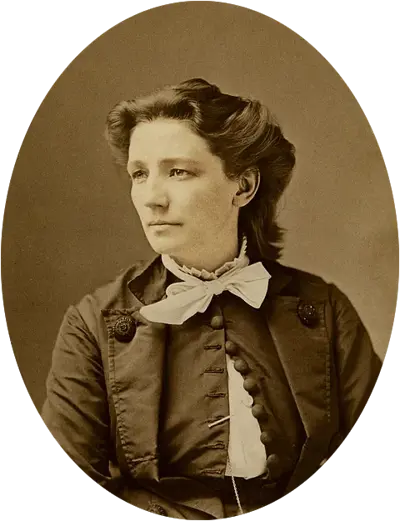
Victoria Claflin Woodhull, later Victoria Woodhull Martin, was an American leader of the women's suffrage movement who ran for President of the United States in the 1872 election. While many historians and authors agree that Woodhull was the first woman to run for the presidency, some disagree with classifying it as a true candidacy because she was younger than the constitutionally mandated age of 35 (Woodhull's 35th birthday was in September 1873, seven months after the March inauguration). However, election coverage by contemporary newspapers does not suggest age was a significant issue; this may, however, be due to the fact that few took the candidacy seriously.
