Timothy Thomas Fortune Quotes
The race cannot succeed, nor build strong citizens, until we have a race of women competent to do more than bear a brood of negative men.
T. Thomas Fortune, 1856-1928, Journalist & Newspaper Publisher, Quoted in Janet Cheatham Bell, Famous Black Quotations
Sourced by: Eigen's Political and Historical Quotations


Although most politicians of the time opposed voting rights, Harding, whose wife was herself a suffragette, and an accomplished woman, tried to lead the nation in the new direction of female equality. It was one of the few laudatory things he did in an otherwise lap luster presidency.


Turkey, the only Islamic nation where women have equal rights, made huge developmental and reform strides immediately after Ataturk reformed Turkish society and gave women the vote, freed them from veils and chadors, educated them and gave them equal employment rights. Turkey moved from an impoverished 3rd world nation to a modern industrialized democracy.

This 12th century observation which appears so obvious has been ignored by the vast majority of Islamic scholars and writers subsequent until modern times, and even then they represent the small reform minority of Islamic thinking.


Women were not, in the decisions of Canadian courts “Persons.” As such they were not allowed to serve as public officials and legislators. In 1929 the Judicial Committee of the Privy Council reversed previous interpretations and declared women eligible for all public offices. It became known as “The Persons Case.” Murphy then wrote her argument. Murphy wrote serious non-fiction under her own name and novels under the pseudonym Janey Canuck.


She was prescient. The amendment was never ratified by enough states.


Jinnah was a modern Islamist who saw the role of females in a modern context. He, like the Indian Hindu leaders were in a sense products of the West and Western government and education. He would be very surprised that in his Pakistan men can murder their female relatives who they believe have dishonored the family, or that women would not be educated in the Madrassas, or that authorities could sentence a female relative of a man deemed guilty of seduction to be gang raped, but that is what happens in modern Pakistan. Jinnah and many of the early leaders believed that their new government could modernize Islam but the control and influence went the other way. Pakistan became a religiously dominated autocracy rather than the democracy that Jinnah foresaw.

In one of the earliest claims that women should be allowed to preach, she made a theological argument and then challenged the male theologians to better her arguments. Although she was very demur, intellectually and theologically she “took it right at them.” Such intellectual aggression by women was virtually unheard of.

In contemporary Iran, no one has any freedom in the International and Western sense of freedom. There is no freedom of speech, freedom of assembly, freedom of the press, freedom of religion, freedom to travel, freedom of the press, freedom of dress, or other fundamental freedoms of not only the West but the United Nations Declaration of Human Rights. However, within those restrictions, women tend to be treated more equally than in other Islamic Middle Eastern nations. Not completely equal as they have many additional restrictions that males do not have, but they can work, freely, teach and hold some positions of responsibility and power which women may not do in much of the Islamic world.
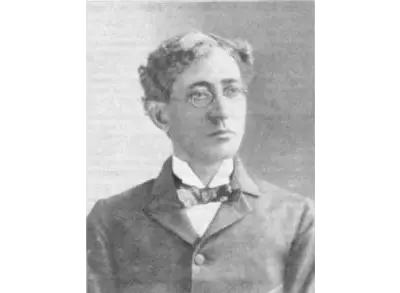
Timothy Thomas Fortune was an American orator, civil rights leader, journalist, writer, editor and publisher. He was the highly influential editor of the nation's leading black newspaper The New York Age and was the leading economist in the black community. He was a long-time adviser to Booker T. Washington and was the editor of Washington's first autobiography, The Story of My Life and Work. Fortune's philosophy of militant agitation on behalf of the rights of black people laid one of the foundations of the Civil Rights Movement.
