Angelina Grimke Quotes
Our fathers waged a bloody conflict with England, because they were taxed without being represented .... They were not willing to be governed by laws which they had no voice in making; but this is the way in which women are governed in this Republic.
Angelina Grimke, 1805-1879, Abolitionist & Suffragist, Letters to Catherine Beecher, No. 11, 1836
Sourced by: Eigen's Political and Historical Quotations

Referring to new laws that would be necessary after a proposed Declaration of Independence:

Billinghurst was physically handicapped without the use of her legs. She protested and marched in protest parades using a hand propelled tricycle which the police sometimes dumped her out of and left her immobile in alleys.


Woodrow Wilson had just finished speaking to the convention – see {638532}. This statement was thought be some to be insulting to the President who said he favored the right of women to vote, but did very little if anything to make that happen. Although Shaw was an ordained Methodist Minister, the Methodist Episcopal Church refused to allow her to preach because of her suffrage views.


The editorial was in support of women’s suffrage—the right to vote which at the time women did not have in Britain. Women were very active in protests and demonstrations. Tactics sometimes involved civil disobedience and chaining themselves to public buildings. It was the civil disobedience and disruptions that the newspaper referred to as the “follies and excesses.” In retrospect today, it is amazing how threatened the society felt and how they reacted to the “threat” of females voting. It does however give us a perspective on those contemporary societies which restrict women’s voting rights.


She was the first presidential candidate's wife to admit such a radical position.


The classification of women with criminals and lunatics referred to the fact that at this time Women could not vote in New Zealand or any other nation of the world. The following year, much as a result of her efforts, New Zealand became the first country in the world to allow women to vote.


Hunt gave as an example Mary Smith of Stanmore. This quotation is very interesting in the history of women’s suffrage. Hunt was a strong advocate for Universal Suffrage (See {616653}.) At the time, even men had to be a taxpayer and own a sufficient amount of property to vote. Less than 20% of the population of Britain were allowed to vote. The argument at the time was that the husband would represent the family’s interest at the ballot box and there was no need for women to vote. But by facing parliament with the logical inconsistency of its position, he was able to make his point, although there were very few women like Mary Smith who were single and had the economic resources to qualify. Most widows remarried so even if they had economic resources, there was a man who could assume the then perceived role of head of the household.


None of the other parties had any women candidates. The Communists got a lot of votes from women whose only way they could support the participation of women in Italian politics, was to vote for a Communist candidate. And people who were opposed to non-traditional roles for women then conflated the feminists and the Communists just as had been done in America, England and many other countries and accused all feminists of being communists.
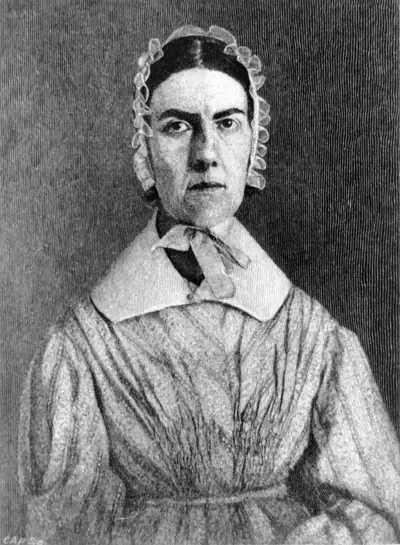
Angelina Emily Grimké Weld was an American abolitionist, political activist, women's rights advocate, and supporter of the women's suffrage movement. She and her sister Sarah Moore Grimké are the only white Southern women who became abolitionists. The sisters lived together as adults, while Angelina was the wife of abolitionist leader Theodore Dwight Weld.
