Benjamin Franklin Quotes
The execution of the Stamp Act will be impractical, without occasioning more mischief that it was worth by totally alienating the affections of the Americans.
His advice was not taken. The result was as Franklin predicted.
Benjamin Franklin, 1706-1790, Member of the Continental Congress & the Constitutional Convention, Governor of Pennsylvania, President of the Pennsylvania Assembly, U.S. Minister to France, Postmaster General of the American Colonies, Recommendation to Lord Dartmouth
Sourced by: Eigen's Political and Historical Quotations


As a result was in 1799 he was indicted, convicted, and fined $480 and sentenced to 18 months in jail. In 1801, newly elected President Thomas Jefferson pardoned Brown along with all violators of the act.


Wilkes was a strong advocate for the American cause—so much so that some in Parliament tried to deny him his seat in Parliament for his disloyal point of view.

While the official battles of the American Revolution did not begin until 1776, parts of the American colonies were in a de facto state of rebellion and the British could not enforce their laws. See {636925} for another of the King’s statements.

Lee at that time was one of the leaders of the American colonists’ cause. He was born in England and was an old friend of Burgoyne who had just arrived in America. Lee wanted to explain the American viewpoint. Lee later became the senior major general under Washington.

The British had closed Boston Harbor until the English merchants who lost their goods at the Boston Tea Party were paid for their damages. A convention was called to discuss a response to the closing of Boston Harbor and New York City convened a public meeting to come up with instructions for their delegates to the conference. One amazing thing was that they advocated a boycott of English goods. What was amazing was that there was no nation and New York and Massachusetts were separate entities and sectionalism was rife, yet New Yorkers were willing to sacrifice to help Bostonians. The New York sacrifice was all the greater because most of the imports from England landed at New York harbor where there was work created for New Yorkers and business for New York companies. New York stood to lose the most with a boycott. Philadelphia which also advocated a boycott, lost little as they were not a harbor for imports. New Yorkers also provided assistance to their competitors, the Bostonians who were out of work. See {589413}.

Dickinson was one of the “moderates” of the day who tried to find middle ground in the dispute with England over the American Colonies. However, most people were already polarized and soon everyone was forced to choose one side or the other.

This is one of the most fascinating documents of the American Revolution. The British Parliament had passed the very unpopular Stamp Act, a form of tax that required a government stamp, which had to be paid for, to be placed on all legal documents from leases to wills. Governor Bernard opposed the Stamp Act and was trying to have the Colonies exempted (See {613881}). The assembly while apparently advocating obedience to the law and warning the Governor of the possibility of Colonists boycotting legal instruments, actually laid out the strategy and the legal defense for a boycott and provided a revolutionary blueprint for colonists to follow.


The crackdown on Boston which was intended to set an example and intimidate all of the other colonies backfired, and the British were told about it by their own officials in America. But they were so rigid and ideological about monarchy, that the stimulated rebellion rather than suppress them.

This quotation is very important because it illustrates in the first of our great national political debates, the same views held by extreme, right wing anti-government, and Tea Party adherents regarding government in general and taxation in particular. See {634235} and {634234} for more of his arguments at the Ratification Convention.

Ministers refers to the Government Ministers, not to clergy.

Ramsay was discussing the events leading up to the American Revolution. He and many English historians believe that had the British repealed a few if the hated taxes and given America some representation in Parliament, the conflict could easily have been avoided. Ramsay was the first major historian of the American Revolution.


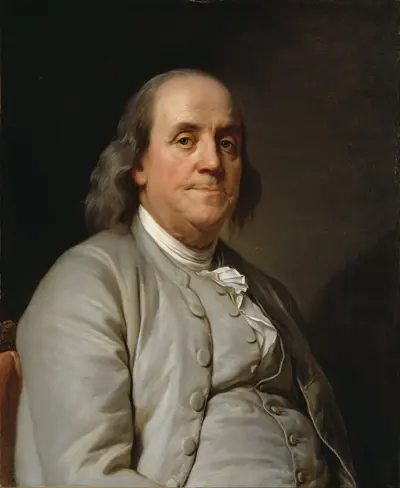
Benjamin Franklin FRS FRSA FRSE was one of the Founding Fathers of the United States. A polymath, he was a leading writer, printer, political philosopher, politician, Freemason, postmaster, scientist, inventor, humorist, civic activist, statesman, and diplomat. As a scientist, he was a major figure in the American Enlightenment and the history of physics for his discoveries and theories regarding electricity. As an inventor, he is known for the lightning rod, bifocals, and the Franklin stove, among other inventions. He founded many civic organizations, including the Library Company, Philadelphia's first fire department, and the University of Pennsylvania.
