Archibald Cary Coolidge Quotes
The outlook is rather that within a few years India will be given up as Egypt has been given up. The British democracy will not try to retain her by force. Of that we may be sure. The enormous benefits that England has conferred on the country and its swarming millions will count for nothing in retaining their allegiance. The jealousies, rivalries and hatreds of race and creed among the many different peoples, though they may make trouble enough hereafter, have not proved capable of preventing them from combining against their British masters.
That is exactly what happened. However it would not happen until after the Second World War.
Archibald Cary Coolidge, 1866–1928, Historian, Political Scientist & Diplomat, Editor-in-chief of Foreign Affairs, “Ten Years of War and Peace”, Foreign Affairs, September 1923
Sourced by: Eigen's Political and Historical Quotations


He persuaded many other rulers to join the Indian Union when India became Independent.

The Germans allied themselves with the Islamic insurgency of the day as a strategic maneuver. The Grand Mufti of Jerusalem broadcast propaganda from Nazi radio in Berlin and was dispatched to organize Muslim fighters in Iraq. Fascism was introduced into the Middle East and the Arabs and Persians saw it as a natural extension of their authoritarian and highly prescriptive forms of religious and civil government. 60 years later, there would be Islamic Fascists throughout the Middle East in control or vying for control of many of the countries.
One of the ideas to implement the Partition of India to create a Muslim Pakistan was to have plebiscites in many provinces to vote on whether the Province should remain with India or be a part of Pakistan. The Punjab was the largest of the mixed religion areas in question but the Punjab governor was opposed to the idea as most of the voters were illiterate and the Pro Pakistan forces would couch the alternatives in stark religious terms to the Muslim voters who will not realize that they could remain as Muslims in India just as they were at the time. In a number of areas—Kashmir being the most notable—there were a majority of Muslims yet enough of them preferred to remain with India than be part of Pakistan as they were Islamic moderates and did not want to be part of a Muslim Pakistan that might pressure them or force them to a more rigid form of Islam. Also many valued democracy and religious freedom. Some doubted Pakistan's likelihood of thriving in its own and preferred the stability of India.

Churchill, out of power at that time, was outraged that the Labour government was about to grant India self-government and independence removing half of the British Empire which he revered. His passion for maintaining the empire was so extreme that it affected his usual great powers of political analysis and prediction. The Congress Party Leaders led India to become the largest democracy the world had ever known, and leaders like Nehru and Gandhi became almost as famous and remembered as was Churchill himself.

This famous quotation, from this important address, at such a critical time in history has been admired for years. Despite his great oratory, the next months were to see almost 2 million Indians of all faiths killed in what was probably the worst internecine violence in human history. Ironically, the politically motivated terrorism had stopped since all the decisions had been made. The motivation for the frightful atrocities that took place from then on was vengeance and fear of more vengeance." 1st Earl Mountbatten of Burma
Even into the 21st century, the problem was not solved and Muslims from Pakistan continue their futile but tragic terrorist tactics to try and acquire more territory from India." 1st Earl Mountbatten of Burma

This speech to over 100,000 people galvanized the Indian nationalists They had been asking the British to change the constitution to give India more independence. Churchill was opposed to any policy that would diminish the British Empire, but needed the Indians as men of India served in the British Army in every major theater of WWII. So instead of saying "No" Churchill held out the possibility but at a later time. He argued that it was inopportune to alter the Constitution in the midst of a world war.

This resolution was the trigger that began the debate which became the Declaration of Independence.

Richard Southwell Bourke. Victoria was then Queen. The role of the Islamic religion in terms of violence, terrorism & rebellion is not uniquely a question of the 21st century. The 19th Century saw much Islamic fundamentalist violence in India and other Islamic Colonies—much more than from other religious groups in similar colonial status. Opinion was divided between those who saw Islam—especially the Wahabi sect—as inciting violence per se. Mayo assigned one of his administrators to do a study of the issue. See {616924} for the study of William Wilson Hunter. Ironically, Lord Mayo was stabbed to death in a terrorist attack on him personally in 1872.

He attempted to broker an agreement between India’s Muslims and Hindus as to the form of the successor government.

Some in the military and state department were distressed by this writing. England was our major WWII ally. We were fighting, side by side with soldiers of many of the colonies of the British Empire. Some nationalists in India were urging non-cooperation in the Allied war effort. Most American leaders adopted the policy of holding our differences with our allies (England, China & Russia) until after the war was won. However, Mrs. Roosevelt, was more outspoken than most other public officials.

In most revolutionary settings leaders have to persuade people who have voted with no success to turn to the rifle. In Ireland at this point, almost all the nationalsits knew that the rifle would help them but they were not sure that a vote would have the effect of a bullet.


India was soon to be granted Independence by the Labor Government, much to the chagrin of Winston Churchill and other Conservative politicians who wanted to diminish the British Empire as little as possible. Jinnah, not wanting the majority Muslim areas of India to be part of a Hindu majority India, came up with this clever alternative. Britain would grant independence only to the Hindu parts of India and the remainder—Pakistan—would remain in the Empire as an autonomous colony. Many of the British politicians believed that that would be a constant friction in the Empire as many of the "Pakistanis" would then want their own independence and use the terror tactics to fight for it. Besides, the Conservatives did not have enough votes to stop Independence to all of India. Jinnah's efforts however were enough to lengthen the debate in the British Parliament thereby delaying independence for all of India and angering the pro-independence leaders throughout India. Jinnah, by then an autocrat, did this in secret, behind the backs of his own Muslim colleagues, many of whom had Independence as their highest priority.
Singh turned him down. Note that even before Pakistan was a country, Jinnah and other Muslim leaders had hopes of grabbing much of India as the British partitioned it, and have been trying to do so ever since the inception of Pakistan

Hobson, like Mark Twain in America, was a major critic of imperialism.
Hobson, like Mark Twain in America, was a major critic of imperialism.
The “We” to which he was referring were the British officials and civil servants who governed all of India as a colony of the British Empire.

The chance was the fact that war—the War of 1812—had been declared between Britain and America. Tecumseh allied himself with General Isaac Brock, the British Commander of the Western Forces. Tecumseh himself was put in charge of all Indian forces and given the rank of a British Brigadier General. However, Brock was killed shortly thereafter, and his replacement, General Procter, was not as skilled at working with Indian Allies and the British-Indian alliance was defeated bringing to an end the notion of “one great Indian nation.”
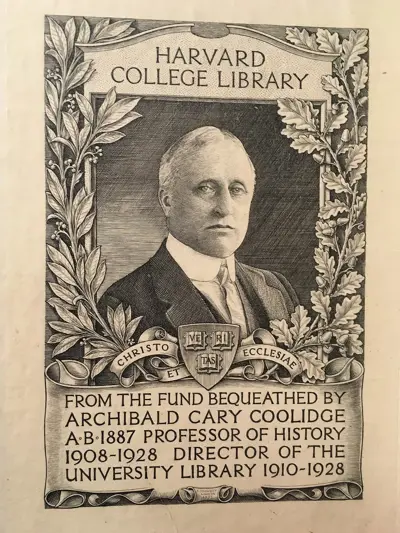
Archibald Cary Coolidge was an American educator and diplomat. He was a Professor of History at Harvard College from 1908 and the first Director of the Harvard University Library from 1910 until his death. Coolidge was also a scholar in international affairs, a planner of the Widener Library, a member of the United States Foreign Service, and editor-in-chief of the policy journal Foreign Affairs.
