Ali Pasha Quotes
Italy, which is inhabited only by a single race speaking the same language and professing the same religion, experiences so many difficulties in its unification. For the moment all it has achieved is anarchy and disorder. Judge what would happen in Turkey if free scope were given to all the different national aspirations …. It would need a century and torrents of blood to establish even a fairly stable state of affairs.
At the time Turkey and the Ottoman Empire included Egypt and most of the Middle East, Chechnya, Georgia, Armenia, Usbekistan, Ajerbaijon, Greece, Albania, Serbia, Bosnia, Croatia and other countries.
Ali Pasha, 1741-1822, Foreign Minister of the Ottoman Empire, Letter to his Paris ambassador, September 1862
Sourced by: Eigen's Political and Historical Quotations

The hatred of the right wing Croats and Serbs is so great for each other, that these two Christian groups find it hard fo have any sort of communication and accommodation of each others. In addition to the traditional religious enmity, during WWII, the Croats were Nazi Allies and created and ran a concentration camp where Serbs were killed and abused.

He was in a Turkish Prison when he made this statement. Some of his more militant PKK followers rejected the statement assuming that it was coerced. Most agreed and were tired of a fight against an overwhelmg Turhish military and police. However the PKK militsntd, devclsred terrorists by the US and many other nations, killed 40,000 Turks including many Kurds who are and have been an ethnic minority in Turkey who have been treated very badly..


Mehmet Talaat Pasha. This incredible quotation not only proves Talaat and the Young Turk Government was driving the extermination policy, but also admits that complete genocide was the policy. Talaat’s bizarre logic was this: We have killed so many Armenians that any remaining will certainly want revenge. Therefore, we have to exterminate them all lest they attempt to obtain justice at the expense of the Turks or even exact revenge against the Turks. The U. S. Ambassador was horrified at the Armenian genocide, and was constantly arguing with the Turkish officials to get them to modify their murderous policies. The Christian Armenians, a minority in Turkey and its lands, were discriminated against like other non Muslim minorities in the Ottoman Empire. But during the Turkish War with Russia and WWI, some Armenians defected and served on the Russian side. Many Turkish citizens took revenge on Armenians by means of murder and torture. Soon, the extermination of the Armenians became the official “Young Turk” government policy. Hundreds of thousands of Armenians were killed outright, and about an equal number were “deported” to special areas. Many died of malnutrition along the forced march of Ethnic Cleansing. Others were murdered as they were deported. No one knows exactly how many Armenians were killed with estimates ranging from ½ million to 4 million. This was the first genocide of the 20th century. Modern Turkish leaders however, are in denial about the Armenian deaths. They claim that there was a war and food was scarce; the only Armenians killed, the claimed were proven Russian agents. They further claim that the Armenian behavior was in large part responsible for the forced deportations because of their lack of patriotism and unwillingness to help the Turkish authorities identify the Russian agents. Most Turks today are unaware of the Armenian Genocide as nothing is taught about the massacres in schools or other institutions. It is against the law in Turkey to even have an intellectual study of the Turkish behavior towards the Armenians, much less publish anything about it.

Sarajevo had been one of the most ethnically integrated cities in the Balkans where Serbs, Croats, and Muslims had been at war with each other throughout the former Yugoslavia.


Disraeli was the 1st Earl of Beaconsfield


The Turks had massacred the vast majority of their Armenian population, and treated the Greeks badly killing and them many of them from territories the Ottoman Turks had conquered. Jews fared better but were 2nd class citizens. Bristol was the American State Department’s senior official and was very “understanding” of the murders and ethnic cleansing despite the fact that President Wilson and most American politicians were very opposed to the Turkish massacres. See {620614} and {620599} . Two factors makes this quotation very significant. First, at the time the State Department was not really under the control of either the President or the Congress. It was not rare for the Department to have its own policies and implement them. This began to change in WWII and FDR exercised much more control than previous presidents since Theodore Roosevelt. The second factor is that there were many racists throughout the State Department—Bristol was only one. There was little concern for minorities’ welfare and the emphasis was on commerce. See {620600} Even in Truman’s administration, the President had massive opposition from the State Department for his policy of recognizing the State of Israel. Today, this kind of racism in the State Department is very rare, and human rights has been one of their major concerns. There were many changes in 75 years.

Hoover was at that time in charge of War Relief in Europe. The Christian Armenians, a minority in Turkey and its lands, were discriminated against like other non Muslim minorities in the Ottoman Empire. But during the Turkish War with Russia and WWI, some Armenians defected and served on the Russian side. Many Turkish citizens took revenge on Armenians by means of murder and torture. Soon, the extermination of the Armenians became the official “Young Turk” government policy. Hundreds of thousands of Armenians were killed outright, and about an equal number were “deported” to special areas. Many died of malnutrition along the forced march of Ethnic Cleansing. Others were murdered as they were deported. No one knows exactly how many Armenians were killed with estimates ranging from ½ million to 4 million. This was the first genocide of the 20th century. Modern Turkish leaders however, are in denial about the Armenian deaths. They claim that there was a war and food was scarce; the only Armenians killed, they claimed were proven Russian agents. They further claim that the Armenian behavior was in large part responsible for the forced deportations because of their lack of patriotism and unwillingness to help the Turkish authorities identify the Russian agents. Most Turks today are unaware of the Armenian Genocide as nothing is taught about the massacres in schools or other institutions. It is against the law in Turkey to even have an intellectual study group of the Turkish behavior towards the Armenians, much less publish anything about it.

The Christian Armenians, a minority in Turkey and its lands, were discriminated against like other non Muslim minorities in the Ottoman Empire. But during the Turkish War with Russia and WWI, some Armenians defected and served on the Russian side. Many Turkish citizens took revenge on Armenians by means of murder and torture. Soon, the extermination of the Armenians became the official “Young Turk” government policy. Hundreds of thousands of Armenians were killed outright, and about an equal number were “deported” to special areas. Many died of malnutrition along the forced march of Ethnic Cleansing. Others were murdered as they were deported. No one knows exactly how many Armenians were killed with estimates ranging from ½ million to 4 million. This was the first genocide of the 20th century. Modern Turkish leaders however, are in denial about the Armenian deaths. They claim that there was a war and food was scarce; the only Armenians killed, the claimed were proven Russian agents. They further claim that the Armenian behavior was in large part responsible for the forced deportations because of their lack of patriotism and unwillingness to help the Turkish authorities identify the Russian agents. Most Turks today are unaware of the Armenian Genocide as nothing is taught about the massacres in schools or other institutions. It is against the law in Turkey to even have an intellectual study of the Turkish behavior towards the Armenians, much less publish anything about it.
Ariel Sharon, before he became Israeli Prime Minister was an Army General, who led the attack on the Palestinian PLO terrorists in Southern Lebanon. He had made an alliance with the Lebanese Christian Phalangists who had been brutalized and many had been murdered by the PLO militants who operated out of the Sabra and Shatila Beirut refugee camps where the terrorists had a safe haven and their PLO headquarters in Shatila. Israeli troops under Sharon had reached Beirut, and then the Phalangists attacked the two refugee camps where they had scores to settle and sought revenge. Somewhere between 700 and 3500 Palestinians were killed. Most of them were civilians (according to the Palestinians) or terrorist fighters (according to the Phalangists). Sharon was faulted by many for the deaths; these critics observe that Sharon, as the victorious military power in the area was responsible according to the rules of war for the safety of all civilians in the area. He commanded the strongest military in the area and he allowed or did not stop the Phalangists who were exacting their revenge. Therefore some accused him of war crimes. There was also an Italian military peacekeeping contingent in the camps but they chose not to intervene.

At the time racism and discrimination in the United States was not only rampant but legal. But change in many substrata of America was detectable and many intellectuals--writers, artists, scientists, educators, theologians, entertainers, groups who would later be called “elites” began to make themselves heard on the subject. Falkner was one whose novels had always taken an anti racist view point and now were overtly calling for political and social change.

This was a common view of Southern leaders. Society had to be monolithic culturally. In the North, the constant immigration from the world over made pluralism much more normative. However, the vast majority of the North opposed slavery and believed that slavery and free labor could not coexist. So the Southern argument on that point was turned on them, and the monolithic views of the South has constantly eroded and become more tolerant and pluralistic and by the 21st century, there were parts of the South that were more tolerant and pluralistic than some parts of the North. Change, reform and liberalism was slow to take hold but it was inexorable.

The amazing thing about this quotation of 1913 is that at the end of the 20th century the Christians were again at the Muslims throats and Bosnian Muslims were being murdered and ethnically cleansed by the Roman Catholics of Croatia and the Eastern Orthodox Christians of Serbia. The hatred had persisted—the legacy of 1000 years before.


Tito did not realize how right he was. The class issues were relatively easy to resolve into a unified nation, but the ethnic, national, and religious difference and historical hatreds and conflicts were held together during Tito’s lifetime, as he was a very strong leader committed to multiculturalism and imposed it on all of Yugoslavia. However, when he did in 1980, Yugoslavia rapidly flew apart into ethnocentric independent cultures which then went to war with each other.

That is exactly what happened. However it would not happen until after the Second World War.
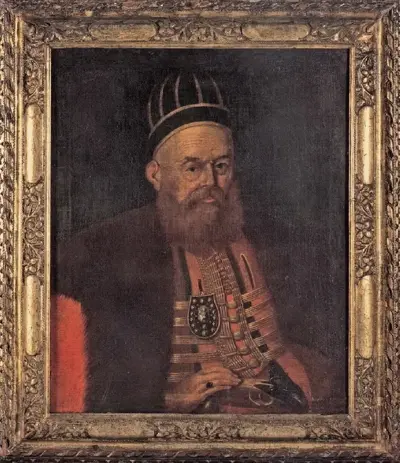
Ali Pasha, variously referred to as of Tepelena or of Janina/Yannina/Ioannina, or the Lion of Yannina, was an Ottoman Albanian ruler who served as pasha of a large part of western Rumelia, the Ottoman Empire's European territories, which was referred to as the Pashalik of Yanina. His court was in Ioannina, and the territory he governed incorporated most of Epirus and the western parts of Thessaly and Greek Macedonia. Ali had three sons: Muhtar Pasha, who served in the 1809 war against the Russians, Veli Pasha, who became Pasha of the Morea Eyalet and Salih Pasha, governor of Vlore.
