Bidhan Chandra Roy Quotes
Along with independence of India from the British Colonial rule, physical and mental development of masses is necessary for rebuilding the nation
Bidhan Chandra Roy, 1882–1962, [B.C. Roy], Indian physician and anti-colonial freedom fighter, Chief Minister of West Bengal, Quoted in Pravina Bhim Sain, Remembering Our Leaders
Sourced by: Eigen's Political and Historical Quotations

He persuaded many other rulers to join the Indian Union when India became Independent.

Churchill, out of power at that time, was outraged that the Labour government was about to grant India self-government and independence removing half of the British Empire which he revered. His passion for maintaining the empire was so extreme that it affected his usual great powers of political analysis and prediction. The Congress Party Leaders led India to become the largest democracy the world had ever known, and leaders like Nehru and Gandhi became almost as famous and remembered as was Churchill himself.


He attempted to broker an agreement between India’s Muslims and Hindus as to the form of the successor government.

This was an incredible prediction that few people thought was possible. This speech was given in the early days of WWII when it was far from clear that we would win.

Some in the military and state department were distressed by this writing. England was our major WWII ally. We were fighting, side by side with soldiers of many of the colonies of the British Empire. Some nationalists in India were urging non-cooperation in the Allied war effort. Most American leaders adopted the policy of holding our differences with our allies (England, China & Russia) until after the war was won. However, Mrs. Roosevelt, was more outspoken than most other public officials.

That is exactly what happened. However it would not happen until after the Second World War.


Although India has been a thriving democracy since its independence. Nonetheless, there has been a strong governmental tradition in India of great regulation and control of business and the economy.


In 1942 it was clear that India would be given its independence soon. There were a number of sticky problems in doing so. One was the fact that when the British came to India, all the states were ruled by Maharajas (Princes, Kings, etc.). The British signed treaties with almost all of them guaranteeing to protect and preserve their local powers in exchange for acceding to British Rule of the national government. But when it came time for independence, democracy was the mode—even in England. The Maharajas insisted that the British leave them with their control of their states as they had agreed, as opposed to creating democratic government at the state level. In the final analysis, the Maharajas lost all their governmental functions and privileges but were able to retain much of their wealth.


The Koreans in the South wanted no part of Kim and his dictatorship.


This speech to over 100,000 people galvanized the Indian nationalists They had been asking the British to change the constitution to give India more independence. Churchill was opposed to any policy that would diminish the British Empire, but needed the Indians as men of India served in the British Army in every major theater of WWII. So instead of saying "No" Churchill held out the possibility but at a later time. He argued that it was inopportune to alter the Constitution in the midst of a world war.

Even into the 21st century, the problem was not solved and Muslims from Pakistan continue their futile but tragic terrorist tactics to try and acquire more territory from India." 1st Earl Mountbatten of Burma
This famous quotation, from this important address, at such a critical time in history has been admired for years. Despite his great oratory, the next months were to see almost 2 million Indians of all faiths killed in what was probably the worst internecine violence in human history. Ironically, the politically motivated terrorism had stopped since all the decisions had been made. The motivation for the frightful atrocities that took place from then on was vengeance and fear of more vengeance." 1st Earl Mountbatten of Burma
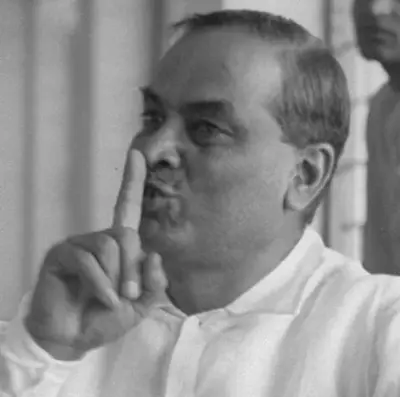
Bidhan Chandra Roy MRCP, FRCS was an Indian physician, educationist, philanthropist, freedom fighter and politician who served as the Chief Minister of West Bengal from 1948 until his death in 1962. Bidhan Roy is often considered the Maker of Modern West Bengal due to his key role in the founding of several institutions and five eminent cities, Durgapur, Kalyani, Bidhannagar, Ashokenagar and Habra. He is one of the few people in history to have obtained F.R.C.S. and M.R.C.P. degrees simultaneously. In India, the National Doctors' Day is celebrated in his memory every year on 1 July. He was awarded Bharat Ratna on 4 February 1961, India's highest civilian honour.
