Kim Il-sung Quotes
The time has come when we Korean people have to unite our strength to build a new, democratic Korea. People from all strata should display patriotic enthusiasm and turn out to build a new Korea. To contribute positively to the work of building the state, let those with strength give strength, let those with knowledge give knowledge, let those with money give money, and let all people who truly love their country, their nation and democracy unite closely and build an independent and sovereign democratic state.
The Koreans in the South wanted no part of Kim and his dictatorship.
Kim Il-sung, 1912–1994, Founder of the Democratic People's Republic of Korea (North Korea), “Great Leader" and "Eternal President”, Victory Speech, Pyongyang, October 14, 1945
Sourced by: Eigen's Political and Historical Quotations


He persuaded many other rulers to join the Indian Union when India became Independent.


For his seditious activities he was sentenced to penal servitude for life. He escaped and came to America where he entered politics

Ultranationalist Secret Organization. Unlike the Italian Black hand for whom it was named, the Serbs were not interested in money. The were a right wing death squad that assassinated all who opposed a single, unitary, Serbian nation. Dimitrijevic was executed in 1917.

Each of the Dutch provinces and towns was relatively independent with no central or federal government that could organize or bring consistency to Holland. Each city and community had their own military with no common command, training, logistics, weapons or other common elements that the times began to require. The representatives from Rotterdam made this public declaration for a unified—federal—government.


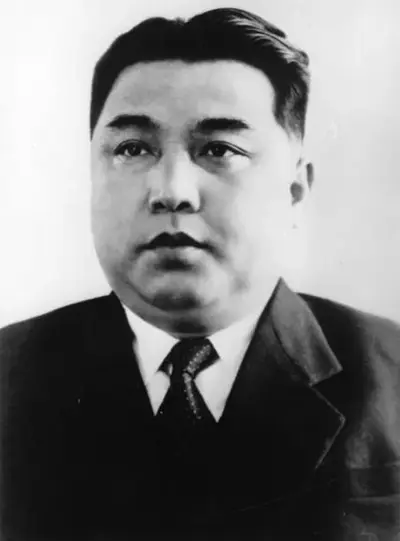
Kim Il-sung was a politician and the founder of North Korea, which he ruled from the country's establishment in 1948 until his death in 1994. He held the posts of Premier from 1948 to 1972 and President from 1972 to 1994. He was also the leader of the Workers' Party of Korea (WPK) from 1949 to 1994 (titled as Chairman from 1949 to 1966 and as General Secretary after 1966). Coming to power after the end of Japanese rule in 1945, he authorized the invasion of South Korea in 1950, triggering an intervention in defense of South Korea by the United Nations led by the United States. Following the military stalemate in the Korean War, a ceasefire was signed on 27 July 1953. He was the third longest-serving non-royal head of state/government in the 20th century, in office for more than 45 years.
