Louis Mountbatten, 1st Earl Mountbatten of Burma Quotes
We stand on the watershed dividing the past from the future. Let us bury the past in so far as it is dead and forget all bitterness and recrimination. Let there be moderation in speech and writing.... There has been violence—shameful, degrading and revolting violence—in various parts of the country. This must end. We are determined to end it. We must make it clear that political ends ae not to be achieved by methods of violence now or in the future.
This famous quotation, from this important address, at such a critical time in history has been admired for years. Despite his great oratory, the next months were to see almost 2 million Indians of all faiths killed in what was probably the worst internecine violence in human history. Ironically, the politically motivated terrorism had stopped since all the decisions had been made. The motivation for the frightful atrocities that took place from then on was vengeance and fear of more vengeance." 1st Earl Mountbatten of Burma
Louis Mountbatten, 1900-1979, , British Admiral & Diplomat, Viceroy of India, National Radio Address to India just before the Partition, June 3, 1947
Sourced by: Eigen's Political and Historical Quotations

Jinnah himself preached non-violence. At the time there was vicious sectarian violence throughout India but especially in The Frontier Province. However, the Muslims of the day did not heed him or Nehru or Gandhi for that matter and the violence continued. Jinnah however was a particularly shrewd politician who successfully used the threat of Muslim violence to obtain a separate Islamic state with Indian independence. He pointed to the threatening resolution issued earlier {627153}. The man who publicly preached peace, privately threatened violence.


The Muslim League was demanding that the Punjab become a part of Pakistan when independence was granted later. However, the Hindus, Sikhs, Buddhists, and Christians were all adamant that they would not live in a Muslim nation which would soon become a de facto theocracy if the British could not control them. The Punjab was divided between India and Pakistan, and hundreds of thousands died in Sikh-Muslim attacks and then Hindu-Muslim conflict in the Punjab.


Two months earlier, Jinnah and the Muslim League had, behind the scenes, orchestrated and abetted vicious, murderous, terrorist attacks on Sikhs by Muslim tribesman brought into the Punjab for the purpose." Master Tara Singh
The throwing of flaming torches to burn out members of the other religion got out of control and the fires spread to the homes of all residents. The fires were so prevalent that the riot was then and has since been referred to as the "Shahalmi Gate Blaze". At the time Jinnah was horrified at the violence, but by the following year he and other Muslim League leaders were aiding and abetting Muslim terrorist attacks to put pressure on the government to create a separate Muslim state upon Indian independence—Pakistan. Most historians agree that the Muslim terrorism in the short run had worked, as it would have been unlikely that India would have been partitioned in the absence of violence. However, it set in motion a cultural pattern of religious hate, bigotry, intolerance, violence and murder which would plague Pakistan thereafter. The politicians throughout the country's history have tried to use the Muslim religious, fundamentalist, extremists for their purposes only to find that the fanatics were out of control and the entire Pakistani population has lived in fear, lest an extremist decide that what they did or say was inimical to Islam and assassinate him or her. They have assassinated even the highest levels of politicians—President, Governors of Provinces, National Legislatures as well as Journalists, writers and academics. But the average Pakistani citizen has always been at risk of brutal murder with hundreds killed every year in an atmosphere of total impunity for the murderers. They have even murdered married women who had been raped on the grounds that they were adulterers and were therefore stoned.

Husayn Ali Nuri

South Africa’s transition from apartheid white minority rule to an interracial society with Black majority rule was one of the great political achievements in history. The Black leadership set a tone of reconciliation and inclusiveness that there was neither back retribution and vengeance, nor extensive white flight. Tutu and Nelson Mandella were two of those most resonsible for the leadership, but the good will and Christian charity of the South African blacks was the key to the success where all other white dominated African nations were NOT able to transition without extensive violence and/or flight.


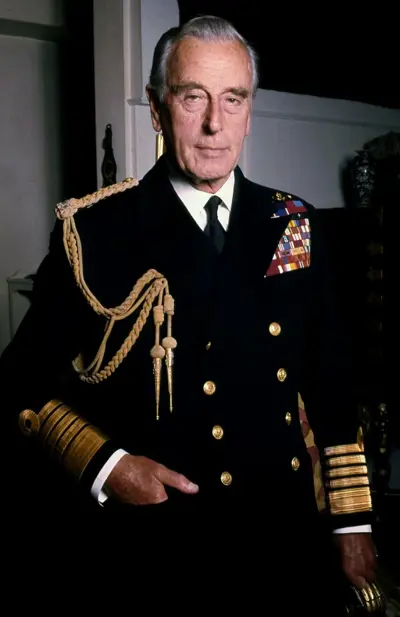
Admiral of the Fleet Louis Francis Albert Victor Nicholas Mountbatten, 1st Earl Mountbatten of Burma, was a British Royal Navy officer and statesman, an uncle of Prince Philip, Duke of Edinburgh, and second cousin once removed of Queen Elizabeth II. During the Second World War, he was Supreme Allied Commander, South East Asia Command. He was the last Viceroy of India and the first governor-general of independent India.
