Mahatma Gandhi Quotes
Freedom of India will demonstrate to all the exploited races of the earth that their freedom is very near.
Gandhi, Mahatma. The Collected Works of Mahatma Gandhi. Vol. 28, Publications Division, Ministry of Information and Broadcasting, Government of India, 1968.


Some in the military and state department were distressed by this writing. England was our major WWII ally. We were fighting, side by side with soldiers of many of the colonies of the British Empire. Some nationalists in India were urging non-cooperation in the Allied war effort. Most American leaders adopted the policy of holding our differences with our allies (England, China & Russia) until after the war was won. However, Mrs. Roosevelt, was more outspoken than most other public officials.

Nguyen Ai Quoc was early pseudonym. At the Versailles WWI Peace Conference a young, 29 year old, Ho Chi Minh showed up and tried to present his petition for Vietnamese independence to Woodrow Wilson and the other non-French leaders. (Indochina was then a French colony.) Little attention was paid to him and his petition. Even though Wilson was for national self determination, all the other major WWI Allies had overseas colonial empires. After suffering losses from German aggression they were interested in getting those back plus reparations—not ceding away any of their then existing territory. They paid little attention to Wilson on the self determination issue and the Senate would not support Wilson on the League of Nations which then might have pressed for self determination. Ho was snubbed. It was a costly, unjust snub for the world.


British colonial economics imported raw materials to England which then exported them back to the colonies as manufactured goods. Gandhi correctly calculated that by minimizing purchase of English cloth, colonial control of India would not be as profitable. Gandhi not only called for the boycott, but called on Indians to spin their own cloth, set an example be spinning himself, and his Congress party adopted the spinning wheel as its logo and symbol which continues today. Narcotics, was at the time not only legal, but British economic interests controlled much of the world narcotics trade. Gandhi’s call for a boycott of narcotics was as much an economic tactic as it was a health measure.


The IRA had just murdered Lord Mountbatten with a bomb on his small boat. Mountbattten, then a 79 year old, elderly man in retirement was a member of the Royal Family. His grandson was also murdered. Mountbatten had not had anything to do with Ireland but to the IRA he was a symbol of British imperialism since he had been the British Viceroy of India. Actually, it was he who had organized and presided over Indian Independence.
Mobutu with Amerucan CIA and French assistance deposed Lumumba, murdered him, and seized power.


The Ottoman Turks, at war with Russia, exterminated a large proportion of the Armenian population of the then Turkish Empire. Some of the ethnic Armenians were working with Armenians in greater Russia and thus were a risk to the Turks. However, they starved, shot, beat, hung, and bayoneted hundreds of thousands of ethnic Armenians, wiping out entire villages and towns. Despite the fact that women and little children were all killed, Modern Turkey even into the 21st century refused to admit that this was a genocide even though there was ample documentation to prove it was not spontaneous but government ordered by the “Young Turks” then controlling Turkey. See {620603} and {612638} for examples. The modern Turks maintain the view expressed during the genocide that Armenians were a threat to Turkish Independence.


He persuaded many other rulers to join the Indian Union when India became Independent.


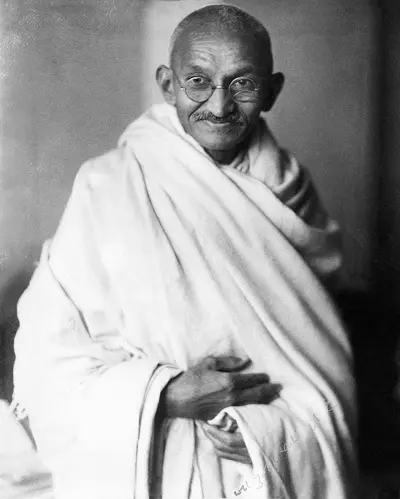
Mohandas Karamchand Gandhi was an Indian lawyer, anti-colonial nationalist, and political ethicist, who employed nonviolent resistance to lead the successful campaign for India's independence from British rule, and in turn inspired movements for civil rights and freedom across the world. The honorific Mahātmā (Sanskrit: "great-souled", "venerable"), first applied to him in 1914 in South Africa, is now used throughout the world.
