Annie Besant Quotes
My own life in India, since I came to it in 1893 to make it my home, has been devoted to one purpose, to give back to India her ancient freedom.
Besant, Annie. India: A Nation: A Plea for Indian Self-Government. T.C. & E.C. Jack, 1915, p. v.

He persuaded many other rulers to join the Indian Union when India became Independent.

British colonial economics imported raw materials to England which then exported them back to the colonies as manufactured goods. Gandhi correctly calculated that by minimizing purchase of English cloth, colonial control of India would not be as profitable. Gandhi not only called for the boycott, but called on Indians to spin their own cloth, set an example be spinning himself, and his Congress party adopted the spinning wheel as its logo and symbol which continues today. Narcotics, was at the time not only legal, but British economic interests controlled much of the world narcotics trade. Gandhi’s call for a boycott of narcotics was as much an economic tactic as it was a health measure.
He had been King of Portugal and then had come to the Portuguese colony of Brazil where he led a revolution against Portugal, declared independence from the “mother country, and was elected as Emperor of Brazil. The Colony was much larger and richer in natural resources than the “mother country.”

That is exactly what happened. However it would not happen until after the Second World War.

Some in the military and state department were distressed by this writing. England was our major WWII ally. We were fighting, side by side with soldiers of many of the colonies of the British Empire. Some nationalists in India were urging non-cooperation in the Allied war effort. Most American leaders adopted the policy of holding our differences with our allies (England, China & Russia) until after the war was won. However, Mrs. Roosevelt, was more outspoken than most other public officials.

This speech to over 100,000 people galvanized the Indian nationalists They had been asking the British to change the constitution to give India more independence. Churchill was opposed to any policy that would diminish the British Empire, but needed the Indians as men of India served in the British Army in every major theater of WWII. So instead of saying "No" Churchill held out the possibility but at a later time. He argued that it was inopportune to alter the Constitution in the midst of a world war.

In the negotiations the Indian nationalists of the Congress Party did not get everything that they wanted. Rarely does anyone in legitimate negotiations. This was a masterful example of oratory where Nehru wanted to produce the euphoria and historical gravitas that was appropriate when the largest group of people in world history gained self-government and independence. Yet the Congress Party had made promises in the platforms over the years that had not been kept. The partition of the one nation into a Muslim state as well as India denied the Indians of some of their historically and economically most important territories and he had to acknowledge that failure without dampening the public enthusiasm for the great achievement. This was a masterpiece.

At the beginning of July, 1826 Adams, deathly ill, was asked to propose a toast to be given in his name for the coming July 4 celebrations. It was:. On his deathbed four days later he was aroused by the firing of cannon. When told it was Independence Day he murmured:

In 1837 and 1839 there were insurrections in Lower Canada against British rule. The British put down the rebellions and executed a few of the leaders.


In most revolutionary settings leaders have to persuade people who have voted with no success to turn to the rifle. In Ireland at this point, almost all the nationalsits knew that the rifle would help them but they were not sure that a vote would have the effect of a bullet.

Nostradamus made thousands of prophecies most of which seem not to have occurred as he predicted. However there were a few that some people believe predicted later events. In this case some think that he predicted the colonization and independence of America.

He attempted to broker an agreement between India’s Muslims and Hindus as to the form of the successor government.


In 1937 the U. S. Treasury Department commissioned a pair of large murals to decorate the lobby or the Ariel Rios Federal Building in Washington DC. On the mural was depicted a U. S. Mail Service from Alaska to Puerto Rico. It showed four Puerto Rican women reading a letter in the Inuit dialect presumably delivered from Alaska. The authorities loved the mural until they discovered the translation of the Inuit letter. This was a direct reference to the Puerto Rican Nationalist Independence Movement. That year 18 Puerto Rican Nationalists were killed and over 100 wounded when police fired into a crowd of demonstrators on March 21. Kent, a famous artist, planted a newspaper story with the translation and soon media all over the company were drawing attention to the Puerto Rican movement, just as Kent had intended.
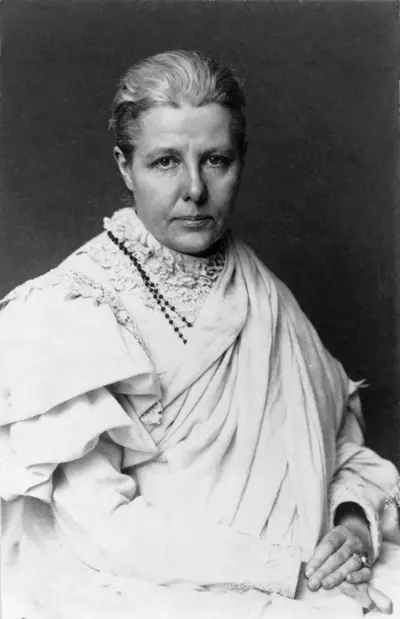
Annie Besant (née Wood; 1 October 1847 – 20 September 1933) was a British socialist, theosophist, freemason, women's rights and Home Rule activist, educationist, and campaigner for Indian nationalism. Regarded as a champion of human freedom, she was an ardent supporter of both Irish and Indian self-rule. She was also a prolific author with over three hundred books and pamphlets to her credit. As an educationist, her contributions included being one of the founders of the Banaras Hindu University. For fifteen years, Besant was a public proponent in England of atheism and scientific materialism. Besant's goal was to provide employment, better living conditions, and proper education for the poor.
