Theobald Wolfe Tone Quotes
The great object of my life has been the independence of my country; for that I have sacrificed everything that is most dear to man…. The connection with England has been her bane.
Theobald Wolfe Tone, 1763–1798, Irish Revolutionary, One of the founding members of the Society of United Irishmen, Father of Irish Republicanism, Quoted in Jonathan Bardon, A History of Ireland
Sourced by: Eigen's Political and Historical Quotations

In one of the most unusual revolutions in world history, Brazil became independent from Portugal via a revolution led by the son of the Portuguese King and heir to the throne, Pedro I. The crown prince of Portugal, led Brazil in her breakaway from Portugal and by popular acclaim became Pedro I, Emperor of Brazil. He is probably the only monarch in history who was the heredity monarch of one kingdom and selected by popular acclaim to the throne of another.

For his seditious activities he was sentenced to penal servitude for life. He escaped and came to America where he entered politics


British colonial economics imported raw materials to England which then exported them back to the colonies as manufactured goods. Gandhi correctly calculated that by minimizing purchase of English cloth, colonial control of India would not be as profitable. Gandhi not only called for the boycott, but called on Indians to spin their own cloth, set an example be spinning himself, and his Congress party adopted the spinning wheel as its logo and symbol which continues today. Narcotics, was at the time not only legal, but British economic interests controlled much of the world narcotics trade. Gandhi’s call for a boycott of narcotics was as much an economic tactic as it was a health measure.
He had been King of Portugal and then had come to the Portuguese colony of Brazil where he led a revolution against Portugal, declared independence from the “mother country, and was elected as Emperor of Brazil. The Colony was much larger and richer in natural resources than the “mother country.”

In most revolutionary settings leaders have to persuade people who have voted with no success to turn to the rifle. In Ireland at this point, almost all the nationalsits knew that the rifle would help them but they were not sure that a vote would have the effect of a bullet.


Chile with help from San Martin had ejected the Spanish. O’Higgins, the Chilean leader had joined up with San Martin and served under his command. The sectional rivalry bothered men like Carrera. Instead of seeing all the South Americans fighting the Spanish as allies as O’Higgins did, Carrera and his brothers refused to join a government of unity and they and their troops were just as dictatorial and cruel as the Spanish had been. O’Higgins gave Indians and Blacks equal rights with whites which distressed the aristocratic Carrera’s. Finally the Carrera’s tried to set up their own government, and the new Chilean government disarmed their militia and executed two of the three Carrera brothers who were leading the militia troops who were little more than thieves and brigands.
In 1837 and 1839 there were insurrections in Lower Canada against British rule. The British put down the rebellions and executed a few of the leaders.

Shortly after the failed uprising the Mufti went to Berlin where he was made a Nazi SS Major General and set up Arab SS Units to exterminate the Jews in the Middle East. See {586894}.


Under his and Pol Pot’s command, the Khmer Rouge exterminated nearly 2 million Cambodians. He was the number two often referred to as “Brother Number two.” In a 1998 corrupt bargain, the government agreed never to prosecute him for genocide or any of his crimes.
The organization sent 2,100 volunteers to fight for South American independence from Spain.


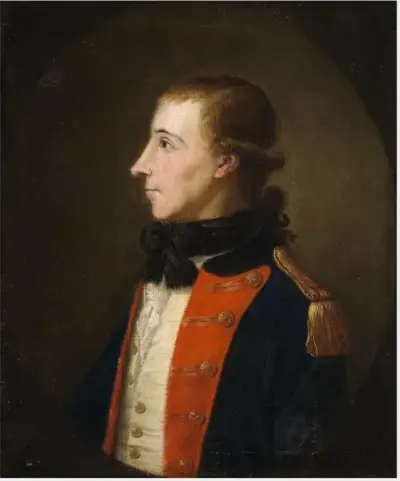
Theobald Wolfe Tone, posthumously known as Wolfe Tone, was a leading Irish revolutionary figure and one of the founding members of the United Irishmen, a republican society that revolted against British rule in Ireland, where he was a leader going into the 1798 Irish Rebellion. He was captured at Lough Swilly, near Buncrana, County Donegal on 3 November 1798, and was sentenced to death on 19 November by hanging. He died seven days later in unclear circumstances. It has since been theorised and agreed upon by most Irish scholars that he committed suicide while in prison.
