Henry A. Wallace Quotes
India, China, and Latin America have a tremendous stake in the people's century. As their masses learn to read and write, and as they become productive mechanics, their standard of living will double and treble.
This was an incredible prediction that few people thought was possible. This speech was given in the early days of WWII when it was far from clear that we would win.
Henry A. Wallace, 1888–1965, Vice President of the United States (Democrat, IA), U. S. Secretary of Agriculture and Secretary of Commerce, Speech, The Century of the Common Man, May 8, 1942
Sourced by: Eigen's Political and Historical Quotations


The relationship of population increase economic growth is a critical one. If an underdeveloped country manages to have a 3% annual economic growth rate and also has a 3.2% population growth, at the end of the year, the average person is actually poorer than he was the previous year. South Korea, China, Thailand and India implemented successful population control and family planning programs before they were able to take advantage of economic development. To modernize, the country must be able to have a surplus of funds which can be invested in roads, schools, hospitals, and other facilities which can produce even more growth later. Too many new mouths to feed, clothe and care for can be a barrier to development even if the economy is reasonably good.


Although the Premier recognizes the importance of environmental protection it is difficult for China and other developing countries to make the necessary trade off’s at the expense of slower growth which means continued poverty. Even in the United States with all its affluence, slowing economic growth for environmental reasons is politically very difficult.


After Turkey’s defeat in WWI, some Turkish leaders like Riza Nur wanted Turkey to become a colony of America. This they believed would hasten Turkey’s development and modernization.


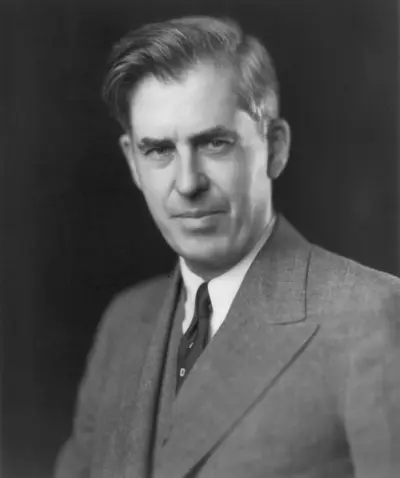
Henry Agard Wallace was an American politician, journalist, farmer and businessman who served as the 33rd vice president of the United States, as well as the 11th U.S. Secretary of Agriculture and the 10th U.S. Secretary of Commerce. He was also the presidential nominee of the left-wing Progressive Party in the 1948 election.
