Jean-Baptiste Say Quotes
Opulent, civilized, and industrious nations, are greater consumers than poor ones, because they are infinitely greater producers.
Jean-Baptiste Say, 1767-1832, French economist and journalist, A Treatise On Political Economy: or the Production, Distribution, and Consumption of Wealth
Sourced by: Eigen's Political and Historical Quotations


This was an incredible prediction that few people thought was possible. This speech was given in the early days of WWII when it was far from clear that we would win.

This view that the more people a country has, the richer it is, has gone hand in hand with the notion that a large population will assure a nation of extensive military prowess. However, both of these are now known to be false. The most heavily populated nations are among the poorest, and military prowess is more a function of the training of troops and the modern tools and weapons. Tiny Israel has demonstrated that many times since its origin. It has been attacked over and over by several nations at a time. Despite the fact that Israel was vastly outnumbered by enemy troops and weapons like tanks and planes, Israel has repeatedly demolished the more populous enemies. The world, observing this, no longer emphasizes trying to build a large manpower pool as it does not help militarily and it makes full employment very difficult.


America’s first political economist


After Turkey’s defeat in WWI, some Turkish leaders like Riza Nur wanted Turkey to become a colony of America. This they believed would hasten Turkey’s development and modernization.


Historically, there are two situations where major changes are made in societies: 1) After great crises—wars, depressions, plagues etc. 2) At times of great prosperity when people are feeling very generous and magnanimous.


While generally true, Mises here again exaggerates his “proof” by selectively ignoring or being ignorant of counter-examples. The Roman Catholic Church is a classic counter-example where priests, monks, and others owned nothing as individuals, but produced some great science (eg Gregor Mendel), art (the illuminated texts of the middle ages), literature (St Thomas Aquinas, etc). The best counter example that was just evident in the last decade of Misis’ life is Communist Russia. Russian science was better than Fance and Germany and second only to the United States. The Russian ballet and orchestras were second to none. Great literature came out of the Soviet Union and the best of it complained about and attacked the Soviet system of the times. In general, Mises principle tended to be correct throughout history but not always as he dogmatically stated.
This is a classic illustration of a quotation illustrating the problem that political discussions have with the issue of causality. Conrad is absolutely correct in stating that investment and innovation as the direct cause for most productivity. However, without the demand created by consumption (or the prospect of it) there will be little capital and effort at innovation. There is a causal chain and different ideological proponents argue for their preferred link in the chain tending to ignore the other links. Many liberals tout increasing consumption and pay little attention to the investment and innovation—an error of the opposite of Conrad’s.

In the most rapid and largest growth of an economy was achieved in the late 1980s, and they managed to do it by maintaining total political control and economic control of the large, critical areas to the degree that any government can control economies.


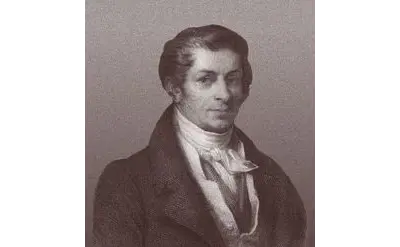
Jean-Baptiste Say was a liberal French economist and businessman who argued in favor of competition, free trade and lifting restraints on business. He is best known for Say's law—also known as the law of markets—which he popularized. Scholars disagree on the surprisingly subtle question of whether it was Say who first stated what is now called Say's law. Moreover, he was one of the first economists to study entrepreneurship and conceptualized entrepreneurs as organizers and leaders of the economy.
