Mahatma Gandhi Quotes
I must fight unto the death the unholy attempt to impose British methods and British institutions on India.
Gandhi, Mahatma. The Collected Works of Mahatma Gandhi. Vol. 19, Publications Division, Ministry of Information and Broadcasting, Government of India, 1966, p. 277.


That is exactly what happened. However it would not happen until after the Second World War.


The Germans allied themselves with the Islamic insurgency of the day as a strategic maneuver. The Grand Mufti of Jerusalem broadcast propaganda from Nazi radio in Berlin and was dispatched to organize Muslim fighters in Iraq. Fascism was introduced into the Middle East and the Arabs and Persians saw it as a natural extension of their authoritarian and highly prescriptive forms of religious and civil government. 60 years later, there would be Islamic Fascists throughout the Middle East in control or vying for control of many of the countries.

He persuaded many other rulers to join the Indian Union when India became Independent.


Nostradamus made thousands of prophecies most of which seem not to have occurred as he predicted. However there were a few that some people believe predicted later events. In this case some think that he predicted the colonization and independence of America.
As early as 1933, 14 years before Indian independence, there was a movement for a separate Muslim nation within India. Ironically, Hindu India was never a nation in any sense of the word, but was a series of independent principalities much like Italy before its unification. However, with the Muslim conquest of the various Indian states, there was a central authority, ruler, and nation for the first time. Later the Muslims had to argue that India was not a country when it was they who had made it such. When the Muslim Emperors were in power, they argued that India was one country under their authority. But when they lost power, the Muslims argued the other side of the issue.


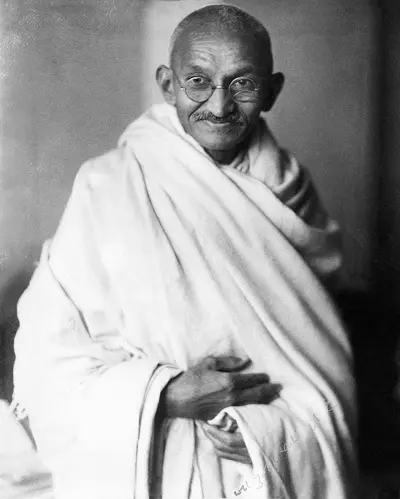
Mohandas Karamchand Gandhi was an Indian lawyer, anti-colonial nationalist, and political ethicist, who employed nonviolent resistance to lead the successful campaign for India's independence from British rule, and in turn inspired movements for civil rights and freedom across the world. The honorific Mahātmā (Sanskrit: "great-souled", "venerable"), first applied to him in 1914 in South Africa, is now used throughout the world.
