James Otis Quotes
No representation of the Colonies in parliament alone, would however be equivalent to a subordinate legislative among themselves; nor so well answer the ends of increasing their prosperity and the commerce of Great-Britain. It would be impossible for the Parliament to judge so well, of their abilities to bear taxes, impositions on trade, and other duties and burdens, or of the local laws that might be really needful, as a legislative here.
James Otis, 1725-1783, Attorney & Member of the Colonial Massachusetts legislature, The Rights of the British Colonies Asserted and Approved, 1764
Sourced by: Eigen's Political and Historical Quotations

This is the same man who introduced the Stamp Act 12 years before which started the whole problem in America. See {74956}.


This was one of the first and is considered the best of the Colonial writings against taxation without representation. Despite this, Dulany is not well known in American history because when the Revolution finally came he was a loyalist.

The colonists in America had no representatives in Parliament. Galloway who opposed armed rebellion against Britain {621966} admitted that the British treatment of America was wrong but saw other solutions. It will never be known if any of them might have worked. The world would have been very different had they been tried.


At the beginning of the dispute between America and England, the issue was the raising of internal American taxes by Parliament without any American representation in Parliament. The issue escalated and when the British began using force, independence then became the American objective.
This was in effect a “Real Estate Promotional Document. Democracy, self government, and the right to set their own taxes were major selling points. See {611572} and {611571} for other “features.”


5th Earl of Rosebery
The patriot legal position did shift over time. Like many grass roots political movements, the Americans had morality and justice on their side and did not think through the implications of their arguments when they opposed the Stamp Act. After the Revolution Leonard had to leave and he went to English Bermuda where he was rewarded for his loyalty with the position of Chief Justice.
This was one of the first and is considered the best of the Colonial writings against taxation without representation. Despite this, Dulany is not well known in American history because when the Revolution finally came he was a loyalist.

The message was conveyed by the Secretary of State, Sir George Calvert (Lord Baltimore). Parliament and the British King were jockeying for position in their relative powers. King James took the position that Parliament could NOT make laws that affected the American Colonies. Parliament disagreed. Later, some of the American patriots would use this quotation to claim that they were only subject to the King and not to Parliament. For related quotes on the King/Parliament issue, see {639144}, {639143}, {639142}, {639141}, {639140}, & {639137}


The clergy of the colonies were split on the American Revolution, but those clergy who supported the revolution made a huge contribution to the individual American’s intellectual view of the legitimacy of Parliament’s making laws governing the American Colonies. The anti-British clerics called for action while other forces of colonial America urged caution.

He was a rice planter but could only export his rice to English Merchants and not sell to other foreign markets. This was the same with tobacco and other commodities. See {636867}.

The profits that England made on the North American Colonies and the Caribbean were very large. 10 years before the American Revolution most sophisticated English politicians realized that and one of the reasons the British fought so hard to keep America from Independence was that money.

This was written more than a year before the American Revolution Battles began. It took time to ship the men and supplies to America and the British did not handle that task with much efficiency. See {636926} for another of the King’s statements.

See {641497} for a quote from the Grenville speech. Fox, a conservative on most issues was an absolute radical on the issue of America. To aggravate the hawks in parliament, he used to dress in the colors of George Washington’s uniform to show his support once the war broke out.

Ramsay was discussing the events leading up to the American Revolution. He and many English historians believe that had the British repealed a few if the hated taxes and given America some representation in Parliament, the conflict could easily have been avoided. Ramsay was the first major historian of the American Revolution.
This was the first proposal for a united American government. It provided for a “President-General” and a unicameral “Grand Council” with representation proportional to population.

This is one of the most fascinating documents of the American Revolution. The British Parliament had passed the very unpopular Stamp Act, a form of tax that required a government stamp, which had to be paid for, to be placed on all legal documents from leases to wills. Governor Bernard opposed the Stamp Act and was trying to have the Colonies exempted (See {613881}). The assembly while apparently advocating obedience to the law and warning the Governor of the possibility of Colonists boycotting legal instruments, actually laid out the strategy and the legal defense for a boycott and provided a revolutionary blueprint for colonists to follow.
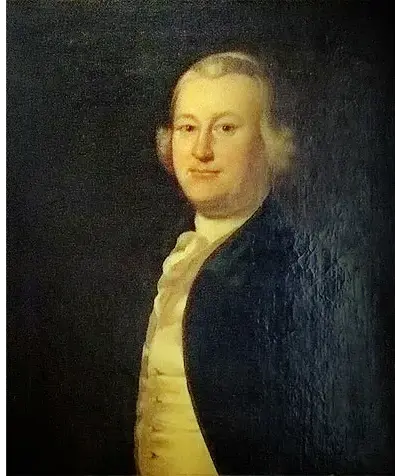
James Otis Jr. was an American lawyer, political activist, pamphleteer, and legislator in Boston, a member of the Massachusetts provincial assembly, and an early advocate of the Patriot views against the policy of Parliament which led to the American Revolution. His well-known catchphrase "Taxation without Representation is tyranny" became the basic Patriot position.
