Henry Laurens Quotes
The Navigation Acts subject me to a much greater tax than any person of equal fortune on the other side of the Atlantic [England].
He was a rice planter but could only export his rice to English Merchants and not sell to other foreign markets. This was the same with tobacco and other commodities. See {636867}.
Henry Laurens, 1724-1792, President of the Continental Congress, South Carolina Merchant & Politician 1769
Sourced by: Eigen's Political and Historical Quotations

This was one of the first and is considered the best of the Colonial arguments against taxation without representation. The argument here about exports also affected other commodities—see {636866}. Despite this, Dulany is not well known in American history because when the Revolution finally came he was a loyalist.


In early times societies were virtually all agricultural with farming most of the gross domestic product of any culture or nation.


He was one of the strongest English advocates of colonization of the New World


The George W. Bush administration when they had a Republican-controlled Congress, had amended the tax laws to treat the earnings of the hedge fund managers differently from people who manage other enterprises in the nation. They gave a group of very wealthy managers whose earnings were already amongst the highest of any managers in the country a huge tax break, while little public attention was paid to the subtlety of complex tax laws. Daschle and others began to draw public attention to the inequity.


This quotation illustrates two important points. First, that foreign and domestic trade and merchants were very much appreciated at the time and an important component of society that there were special protections for traders and merchants. Second, was the national preemption of jurisdiction and control over business and commerce that would enter and leave the city. On most matters the local authorities would handle things, but intercity and international commerce was historically continuously impaired by individual nobles and other authorities making rules affecting merchants who might come to their town or city. The Crown preempted this authority in the 13th century and the “Commerce Clause” of our Constitution was not an unusual concept and had an extensive legal and economic history.

Two decades later, in 2011, the fact that the very wealthy often paid tax at a much lower rate than the middle class and even some working poor became a major political issue.

After WWII, the GI Bill of Rights and other programs gave most of the population a chance to get a college or advanced degree of a trade skill. However, they and their children were not as willing as the previous generation to fund this kind of opportunity.


Leonhardt was pointing to the thousands of logical inconsistencies in the tax code while urging reform. However, the answer to his question has nothing to do with logic. Soda manufacturers are larger and wealthier than the retailers, have more lobbyists, and donate more money to Congressional and Presidential campaigns.
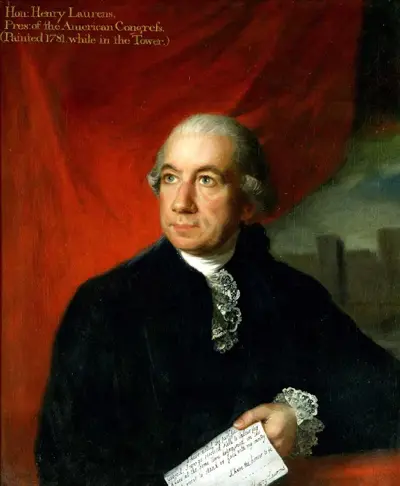
- Born: March 6, 1724
- Died: December 8, 1792
- Nationality: American
- Profession: Politician
Henry Laurens was an American merchant, slave trader, and rice planter from South Carolina who became a political leader during the Revolutionary War. A delegate to the Second Continental Congress, Laurens succeeded John Hancock as President of the Congress. He was a signatory to the Articles of Confederation and President of the Continental Congress when the Articles were passed on November 15, 1777.
