Henry III Quotes
We want and command that all merchants of our lands, as well as merchants of other lands who are within our peace, together with their merchandise, who are coming to the said city, delaying there, or departing from there, shall have the liberty to come, remain and depart, both by water and bridges as by land, and that they shall be free in entering and exiting our land, without any impediment from our bailiffs or those of any other lord, as long as they shall hold to the required and correct customs.
This quotation illustrates two important points. First, that foreign and domestic trade and merchants were very much appreciated at the time and an important component of society that there were special protections for traders and merchants. Second, was the national preemption of jurisdiction and control over business and commerce that would enter and leave the city. On most matters the local authorities would handle things, but intercity and international commerce was historically continuously impaired by individual nobles and other authorities making rules affecting merchants who might come to their town or city. The Crown preempted this authority in the 13th century and the “Commerce Clause” of our Constitution was not an unusual concept and had an extensive legal and economic history.
Henry III, 1207-1272, King of England, Edict authorizing the establishing a new city of New Sarum, January 30, 1227
Sourced by: Eigen's Political and Historical Quotations

Sealed under duress and later repudiated by the King with Papal assistance. This was one of the most important freedoms that established free trade as a principle—one of the reasons that England became so prosperous." John Lackland
“Service” referred to what was then the 7 year time of apprenticeship that a typical American apprentice was required to work for a master tradesman before he was given colonial citizenship and allowed to trade for himself. Under the bill that was passed anyone could come to the British American colonies (except Jews) by taking an oath of allegiance and paying a small fee. Holland and some thought that it discriminated against those apprentices who had come before and apprenticed themselves thus “playing by the rules.” Ever since, immigration and citizenship debates have faced the tension between the need for labor in America and the fairness to the people who had followed the earlier existing rules restricting immigration.

With all the rights of Englishmen from Magna Carta on down, the right of emigration did not appear until modern times.

The right of English merchants had been attained earlier when Ivan IV, the Terrible, was Czar. However the Czar35266s were so autocratic that one might or might not live up to agreements made by their predecessors. So Queen Elisabeth's diplomats had to repeatedly negotiate free trade agreements with Russian Czars.

Muir had spoken at the Convention of Scottish Friends of the People at Edinburgh in 1792. He had advocated election reform allowing all men to vote, not just property owners and was sentenced by Braxfield to the Australian penal colony at Botany Bay. Braxfield expressed the deep distrust the establishment felt even for merchants, traders and others with fungible assets.


As absurd as it seems to us today, traders were not very high in the English social order. Business itself was not well respected. English governing councils were devoid of anyone who had trade of business experience. Holland, in contrast, perhaps went to the other extreme in that traders and business men dominated to political structure. The Dutch were much more successful in foreign trade relatively than the English.

The issue of free trade verses protectionism has been with us throughout American history with national sentiments going one way and then later the other, only to come back and the cycle has gone on. Floyd was very modern in his economic views, so much so that he, even as a Southern politician, opposed slavery on the grounds that it was economically inefficient and the South would never develop industrially if it had no incentive, as existed in the North and England, to reduce the amount of labor required for economic opportunity. He was right on that point as well.

At that period of American History, the Republicans supported high tariffs and protectionism for American companies and it was the Democrats who were the advocates of free trade. Later each of the parties would flip flop their positions and then say that they were advocating their traditional principles.


This was typical of a free trade agreement of the time. It also provided that Englishmen residing for trade in the Ottoman Empire be free of Ottoman poll and head taxes. The Ottomans had such arrangements with France and Venice—then an independent city. In addition to the trade advantages, the Ottomans were militarily concerned with Spain and the English-Spanish hostility was supported and welcomed by the Ottomans. See Murad’s 1590 letter to Queen Elizabeth.


Ivan the Terrible

Sealed under duress and later repudiated by the King with Papal assistance


The entire exploration, founding and colonization of New York was a business enterprise right from the start.

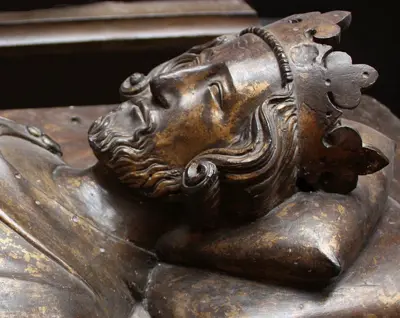
Henry III, also known as Henry of Winchester, was King of England, Lord of Ireland, and Duke of Aquitaine from 1216 until his death in 1272. The son of King John and Isabella of Angoulême, Henry assumed the throne when he was only nine in the middle of the First Barons' War. Cardinal Guala declared the war against the rebel barons to be a religious crusade and Henry's forces, led by William Marshal, defeated the rebels at the battles of Lincoln and Sandwich in 1217. Henry promised to abide by the Great Charter of 1225 (aka Magna Carta), which limited royal power and protected the rights of the major barons. His early rule was dominated first by Hubert de Burgh and then Peter des Roches, who re-established royal authority after the war. In 1230, the King attempted to reconquer the provinces of France that had once belonged to his father, but the invasion was a debacle. A revolt led by William Marshal's son, Richard Marshal, broke out in 1232, ending in a peace settlement negotiated by the Church.
