Murad III Quotes
We the most sacred Moslem Emperor … Murad III, in token of our Imperial friendship … with Elizabeth, Queen of England, does signify and declare that the people and subjects of the same Queen, may safely and securely come to our princely dominions, with their goods and merchandise, and ladings and other commodities by sea, in great and small vessels, and by land with their carriages and cattle, and that no man shall hurt them, but they may buy and sell without hindrance …
This was typical of a free trade agreement of the time. It also provided that Englishmen residing for trade in the Ottoman Empire be free of Ottoman poll and head taxes. The Ottomans had such arrangements with France and Venice—then an independent city. In addition to the trade advantages, the Ottomans were militarily concerned with Spain and the English-Spanish hostility was supported and welcomed by the Ottomans. See Murad’s 1590 letter to Queen Elizabeth.
Murad III, 1546-1595, Ottoman Sultan [Emperor], Decree, 1580
Sourced by: Eigen's Political and Historical Quotations

Ivan the Terrible

The right of English merchants had been attained earlier when Ivan IV, the Terrible, was Czar. However the Czar35266s were so autocratic that one might or might not live up to agreements made by their predecessors. So Queen Elisabeth's diplomats had to repeatedly negotiate free trade agreements with Russian Czars.


This quotation illustrates two important points. First, that foreign and domestic trade and merchants were very much appreciated at the time and an important component of society that there were special protections for traders and merchants. Second, was the national preemption of jurisdiction and control over business and commerce that would enter and leave the city. On most matters the local authorities would handle things, but intercity and international commerce was historically continuously impaired by individual nobles and other authorities making rules affecting merchants who might come to their town or city. The Crown preempted this authority in the 13th century and the “Commerce Clause” of our Constitution was not an unusual concept and had an extensive legal and economic history.

See {640105} and {640104} for more about the Capitulations Treaty.


Sealed under duress and later repudiated by the King with Papal assistance. This was one of the most important freedoms that established free trade as a principle—one of the reasons that England became so prosperous." John Lackland


The treaty followed an aggressive military policy of Russia against the Ottomans on several fronts. Turkey then granted independence to the Crimea and ceded control of several key ports to Russia. This treaty was seen as a major humiliation of the Ottoman Empire and marked a turning point in the relations between Europe and the Middle East.


Inscribed in the John Adams Building of the Library of Congress. On this subject Jefferson was in agreement with George Washington {37176} and his political opponent, John Adams {592705}.


2nd Viscount Melbourne. The “American treaty” was the Webster–Ashburton Treaty to adjust the final borders between Canada and the United States that were still in dispute from the War of 1812. Note that the British Prime Minister was critical of the position that was being taken be some British diplomats. In many American negotiations with Russia and others, there are hard liners who believe that the negotiators want too much to preserve peace and are not sufficiently willing to go to war for the nation’s principles and honor. As this quotation shows, this is not just an American phenomenon, but in almost all nations there are hard liners critical of all international negotiations and fearing that a desire for an agreement will undermine the positions that should be taken. This is an example where the hard liners were on the non American side.
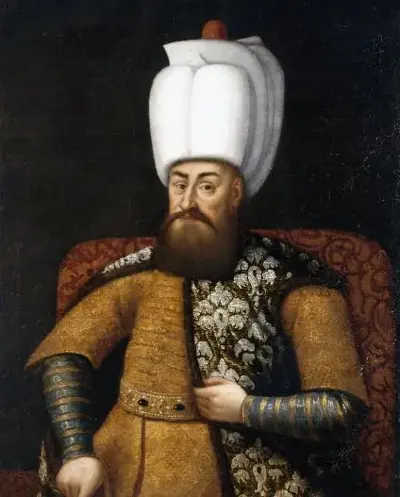
Murad III (Ottoman Turkish: مراد ثالث Murād-i sālis, Turkish: III.Murat) was the Sultan of the Ottoman Empire from 1574 until his death in 1595.
