Douglas William Jerrold Quotes
The best thing I know between France and England is- the sea.
Douglas Jerrold, 1803-1857, English Journalist & Humorist, Wit and Opinions of Douglas Jerrold, ‘The Anglo-French Alliance’
Sourced by: Eigen's Political and Historical Quotations


At the time there were some very isolationist leaders of the Republican Party and the party was split. Willkie, who was then a possible Republican Presidential Candidate, absolutely shocked partygoers of both parties but especially Senator Taft who himself was a strong isolationist and potential candidate himself. Loyal party members then as now are always expected to support the nominee of the party regardless of their positions. However, Hitler and fascism were considered such a serious risk to the United States and the world, by men like Willkie that the usual party politics did not apply.

The “proofs” were diplomatic assurances—treaties—that England would guarantee the territorial integrity of Belgium. The British made strong diplomatic efforts to persuade Germany not to occupy Belgium. The German’s none the less send armies in under the excuse that if they did not, the French would occupy the country and have a strategic advantage over them. Diplomacy could do no more good. England had to send troops or renege on its obligations. So England was in WWI.

The existing treaties of many of the different European countries like the NATO Treaty obliged them to assist their allies if they were involved in war. Once Austria attacked Serbia, Russia had to assist Serbia against Austria. Germany then joined with Austria and that triggered the treaty whereby France had to support Russia. And when Germany overran Belgium to attack France, England was obligated to come to Belgium’s defense. The only country that had planned for and wanted war was Germany who used her obligation to Austria as the excuse to implement her war plans (see {642092}). The entire Western World was at war when all but one nation wanted to avoid war. The communications and diplomacy of the time could not keep up with events and one of the worst wars in history ensued.

“The word “monitoring” is a polite diplomatic word for “spying on”. She made this statement in July of 2014 when the Germans discovered that the United States was spying on their government and ejected key Americans from the country. Albright was explaining that this is extremely common and “normal” between allies. See {640830} for more on this subject.


They were both children of Queen Victoria of England.

Diplomatic recognition of the People’s Republic of China was being debated. Many of Churchill’s Conservative Party Colleagues were opposed on the grounds that diplomatic relations gives a signal of legitimacy. In the U. S. this general issue is a constant source of political controversy when diplomatic relations and talks are considered with Iran, Cuba and North Korea.

2nd Viscount Melbourne. The “American treaty” was the Webster–Ashburton Treaty to adjust the final borders between Canada and the United States that were still in dispute from the War of 1812. Note that the British Prime Minister was critical of the position that was being taken be some British diplomats. In many American negotiations with Russia and others, there are hard liners who believe that the negotiators want too much to preserve peace and are not sufficiently willing to go to war for the nation’s principles and honor. As this quotation shows, this is not just an American phenomenon, but in almost all nations there are hard liners critical of all international negotiations and fearing that a desire for an agreement will undermine the positions that should be taken. This is an example where the hard liners were on the non American side.


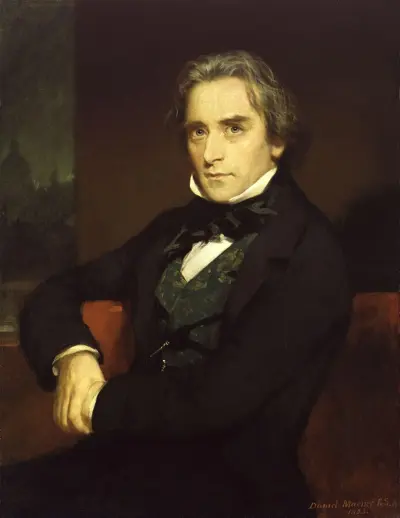
Douglas William Jerrold was an English dramatist and writer.
