Josiah Child Quotes
They [the Dutch] have in their greatest Councils of State and War, trading Merchants that have lived abroad in most parts of the World; who have not only the Theoretical Knowledge, but the Practical Experience of Trade, by whom Laws and Orders are contrived, and Peaces with foreign Princes projected, to the great advantage of their Trade.
As absurd as it seems to us today, traders were not very high in the English social order. Business itself was not well respected. English governing councils were devoid of anyone who had trade of business experience. Holland, in contrast, perhaps went to the other extreme in that traders and business men dominated to political structure. The Dutch were much more successful in foreign trade relatively than the English.
Josiah Child, 1630-1699, English Governor of the East India Company, Brief Observations Concerning Trade and Interest of Money, 1668
Sourced by: Eigen's Political and Historical Quotations


North was none-the-less in favor of allowing interest rates be much higher, but was stating the best argument, believed at the time by most English experts, and many American economists today.

This quotation illustrates two important points. First, that foreign and domestic trade and merchants were very much appreciated at the time and an important component of society that there were special protections for traders and merchants. Second, was the national preemption of jurisdiction and control over business and commerce that would enter and leave the city. On most matters the local authorities would handle things, but intercity and international commerce was historically continuously impaired by individual nobles and other authorities making rules affecting merchants who might come to their town or city. The Crown preempted this authority in the 13th century and the “Commerce Clause” of our Constitution was not an unusual concept and had an extensive legal and economic history.


Turgot was one of the most advanced economic thinkers in Europe and realized, even before most of the Americans, that by freeing itself England, that the Americans would be forced to become free traders and that in turn would make America a major Economic power despite the fact that American economic policy over the years vacillated between protectionism and free trade.

The nation, under the pressure of a depression, had adopted a free trade philosophy. We would go back to protectionism in the 1930s and back to free trade in the 1960s. Ironically, it was generally the Republican party that has driven these shifts. There has always been a free trade wing of the party and an isolationist wing.


Drug prohibition and control can be Unlike most countries Cocaine and Opiates were sold very aggressively in the United States. In many cases it was for medicinals where the user had little or no idea of the active ingredient. Patent Medicine vendors sold their wares through almost every possible outlet in American commerce. See {617350}.

This was an amazing leap in the inducement of foreign trade. The Visigoths valued foreign trade so highly that they realized that many foreign merchants would not come to “barbarian lands” for fear of running afoul of local “barbarian” laws. To motivate trade, they actually gave up their legal sovereignty. Rome and the other larger markets did not have to make such concessions. This is the most formalized and sophisticated compendium of laws of the so-called “barbaric peoples” of Europe. The compilation was in many ways a documentation of the traditional laws of the Visigoths that had evolved over hundreds of years.


England in contrast did not even educate many men in arithmetic and accounting and women not at all with the sexist English culture of the day. English merchants were notorious for selling their business at low prices as they got older unless they had an adult son with an aptitude for the business. The Dutch, with educated women could have a wife run a business if the husband died or was disabled, and allow children to grow up, thus keeping the business in the family, but more important for Holland, keeping the business thriving.
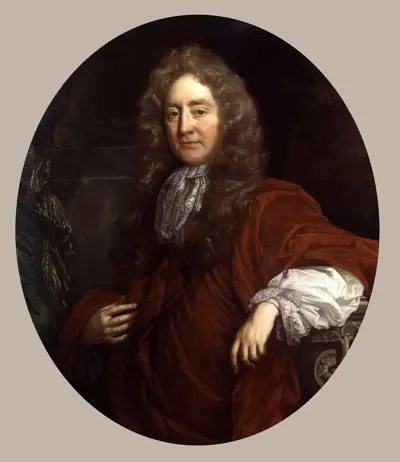
Sir Josiah Child, 1st Baronet, MP, was an English economist, merchant and politician. He was an economist proponent of mercantilism and governor of the East India Company. He led the company in the Anglo-Mughal War.
