William McKinley Quotes
We have quit discussing the tariff, and have turned our attention to getting trade wherever it can be found.
The nation, under the pressure of a depression, had adopted a free trade philosophy. We would go back to protectionism in the 1930s and back to free trade in the 1960s. Ironically, it was generally the Republican party that has driven these shifts. There has always been a free trade wing of the party and an isolationist wing.
William McKinley, 1843-1901, 25th President of the United States (Republican, OH), Speech, Commercial Club Reception, Boston, February 17, 1899
Sourced by: Eigen's Political and Historical Quotations


A self-contained market would be one in which a country only makes products that it sells within its borders, and only sells products that in makes in the country. Very primitive cultures were self-contained markets, but trading generally takes place whenever two cultures interact unless politicians artificially prevent it.

Turgot was one of the most advanced economic thinkers in Europe and realized, even before most of the Americans, that by freeing itself England, that the Americans would be forced to become free traders and that in turn would make America a major Economic power despite the fact that American economic policy over the years vacillated between protectionism and free trade.


Referring to NAFTA, CAFTA and other international trade agreements


The issue of free trade has been controversial during the entire history of our Republic. At the time it was the Republicans who were the protectionists and the Democrats, the free traders.


There has always been pressure from different interests to exempt certain products from duty and place higher duties on others. Calhoun urged a policy that would be based on general economic prinicples and conditions and not on pressure from special vested interests. He was a senator at the time.


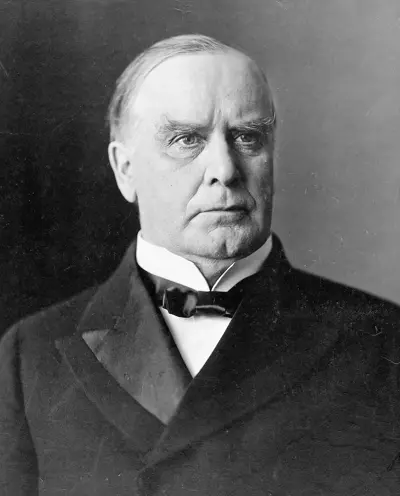
William McKinley was the 25th president of the United States, serving from 1897 until his assassination in 1901. McKinley was president during the Spanish–American War of 1898, raised protective tariffs to boost American industry, and rejected the expansionary monetary policy of free silver, keeping the nation on the gold standard.
